
Table of Contents
- Step 1: Define the Scope of Maintenance Work
- Step 2: Check Legal and Industry Compliance
- Step 3: WHS Compliance for Strata Contractors
- Step 4: How to Request Quotes for Strata Repairs
- Step 5: Review Management Contracts and Fees
- Step 6: Use a Strata Maintenance Contractor Checklist
- Step 7: Monitor Performance and Handle Issues
- Conclusion
- Frequently Asked Questions
Last Updated: September 17, 2026
Step 1: Define the Scope of Maintenance Work
Choosing the right strata maintenance contractor starts with knowing exactly what you need done. A strata maintenance contractor is a licensed tradesperson or firm engaged by an owners corporation to carry out repairs, servicing and upkeep on common property.
- Preventative maintenance, scheduled servicing that stops small problems becoming building defects
- Reactive repairs, fixing what has already failed
- Emergency repairs, urgent work that can’t wait for the next meeting
Photograph every surface before you request quotes. Contractors price more accurately from images than from a verbal description, and you get a fairer comparison across the board.
Step 2: Check Legal and Industry Compliance
Compliance is where cheap quotes quietly become expensive mistakes. Before you shortlist anyone, verify trade licenses, public liability insurance and professional indemnity cover. Ask for certificates of currency, not just policy numbers, and check the expiry dates yourself.
Build a simple compliance file for each tenderer:
| Document | Why It Matters | Check |
|---|---|---|
| Trade licence | Confirms the contractor is legally qualified | Valid and current |
| Public liability insurance | Covers third-party injury or damage | Minimum cover adequate |
| Professional indemnity | Covers faulty advice or workmanship | Matches scope |
| WHS documentation | Shows safety systems are in place | Current and relevant |
Step 3: WHS Compliance for Strata Contractors
WHS compliance for strata contractors is non-negotiable, and it’s the section most committees skim past. Any contractor working at height, using pressure equipment or handling chemicals must have a documented safety approach, including risk assessments and safe work method statements where the work is high-risk.
Never let work start before a safe work method statement is provided for high-risk activity. If an incident occurs and no documentation exists, the owners corporation can share the liability.
Step 4: How to Request Quotes for Strata Repairs
Knowing how to request quotes for strata repairs properly is what separates a fair tender process from a guessing game. Send the same written scope to at least three contractors, request itemised pricing rather than a lump sum, and set a clear deadline for responses.
A useful quote includes:
- A breakdown of labour and materials
- The proposed method and equipment
- Timeframe for completion
- Warranty or guarantee terms
- Insurance and licence details attached
Step 5: Review Management Contracts and Fees
The management contract is where accountability is either locked in or lost. Read it for the termination clause, the fee structure, and what happens if performance slips. Management fees should be transparent, with no vague “administration” line items that balloon later.
The clauses that decide whether you can exit
Most strata management agreements run on a fixed term with an automatic rollover. The trap is the notice window: if the contract requires written notice 60 or 90 days before the end of term, a committee that misses that date is locked in for another full term. Before signing, confirm in writing:
- Term and commencement date, when the clock starts and how long the initial term runs
- Rollover mechanism, whether it renews automatically and the exact notice period to prevent it
- Termination for convenience, whether you can exit mid-term and on what notice
- Termination for cause, what counts as a material breach and how many days the contractor has to remedy it
- Handover obligations, keys, access codes, asset registers, compliance files and outstanding work orders
Fee structures and what to interrogate
Management fees are usually quoted as a flat monthly retainer, a percentage of expenditure, or a hybrid with a per-job margin. Each has a different incentive:
| Fee model | What it rewards | What to watch |
|---|---|---|
| Flat retainer | Predictable budgeting | Scope creep, extra jobs billed separately |
| Percentage of spend | Volume of work | Inflated scopes and unnecessary repairs |
| Retainer plus margin | Steady base plus jobs | Margin applied on top of sub-contractor invoices |
Service level agreements with teeth
A service level agreement should state response times for emergency repairs and standard jobs. Without one, you have no measurable standard to hold anyone to. A workable SLA specifies:
- Emergency response, attendance within a set number of hours, 24/7
- Urgent (non-emergency), attendance within one to two business days
- Routine, scheduled within an agreed window
- Reporting, written confirmation of completion, with photos where relevant
- Remedies, service credits, re-performance at no cost, or termination rights if targets are missed repeatedly
Vetting sub-contractor insurance, the gap most committees miss
Your contractor’s insurance does not automatically extend to the tradespeople they engage. If your contractor delegates roof work, electrical or plumbing to a third party, that sub-contractor needs their own public liability cover, and in many cases their own licence for the class of work. Ask for:
- Certificates of currency for every sub-contractor, not just the head contractor
- Confirmation that the head contractor’s policy does not exclude sub-contracted labour
- Evidence that sub-contractors hold the correct trade licence for their scope
- A written process for how the contractor verifies and re-checks sub-contractor cover at renewal
Never accept a policy number without a certificate of currency. Certificates show the insured entity, the cover limit and the expiry date, a policy number alone proves nothing.
Step 6: Use a Strata Maintenance Contractor Checklist
A strata maintenance contractor checklist turns a complicated procurement decision into a repeatable process. Use it for every tender so your committee applies the same standard each time.

- Scope of work documented and photographed
- Trade licence verified and current
- Public liability and professional indemnity certificates sighted
- WHS documentation and risk assessments provided
- Itemised quote received from at least three contractors
- Sub-contractor insurance confirmed for any delegated work
- Service level agreement with response times included
- Termination clause reviewed and acceptable
- Performance monitoring method agreed
- Vendor vetting completed for sub-contractors
Step 7: Monitor Performance and Handle Issues
Ongoing performance monitoring keeps a good contractor good. Track completion times, rework rates and how quickly issues are resolved. Digital management tools now let committees log maintenance requests, store compliance documents and track a long-term capital works plan in one place, which makes due diligence at the next tender far easier.
A simple performance scorecard
Set the scorecard up at the start of the contract, not after the first dispute. For each job, record:
- Response time, hours from request to attendance, against the SLA target
- Completion time, days from attendance to sign-off
- Rework rate, how often the same asset needs a second visit within 12 months
- Documentation, whether photos, reports and compliance certificates were supplied
- Communication, whether the committee was notified of delays before the deadline, not after
Conflict resolution protocol when performance slips
Most disputes trace back to vague scopes and missing performance standards, not bad tradespeople. When a contractor fails to meet standards mid-contract, follow a documented sequence rather than escalating informally:
- Record the issue, date, asset, what was agreed, what was delivered, and the SLA clause it relates to
- Notify in writing, a short email referencing the SLA and requesting a written response within a set timeframe (five business days is common)
- Meet to resolve, give the contractor an opportunity to propose a remedy, including re-performance at no cost
- Issue a formal notice, if the response is inadequate, issue a breach notice under the contract, stating the remedy required and the deadline
- Escalate only as the contract allows, mediation, service credits, or termination for cause, in the order the contract sets out
Evaluating a contractor’s digital tools
A contractor’s software is a proxy for how they run their operation. When comparing tenderers, ask what platform they use for job logging, document storage and reporting, and whether the committee gets read-only access. Useful features to look for:
- A shared portal where the committee can log requests and see status
- Automatic storage of compliance certificates with expiry reminders
- Photo evidence attached to each completed job
- Exportable reports for annual general meetings and insurance renewals
- Integration with a 10-year maintenance plan so capital works are tracked against actual spend
Sustainability and energy efficiency as selection criteria
Modern strata buildings increasingly prioritise green energy and lower operating costs, and this is a growing niche that most guides ignore. When tendering, ask contractors to specify:
- Environmentally conscious methods, such as biodegradable cleaning solutions for exterior surfaces
- Water-efficient equipment and run-off controls for pressure washing
- Waste separation and responsible disposal of green waste and debris
- Any relevant environmental or sustainability certifications the business holds
- Whether they can advise on energy-efficient upgrades as part of scheduled maintenance
Monitoring, conflict resolution and sustainability are not separate tasks, they are the same contract viewed at different points. Build the scorecard, the escalation steps and the environmental expectations into the agreement at the start, and every later conversation has a reference point.
Conclusion
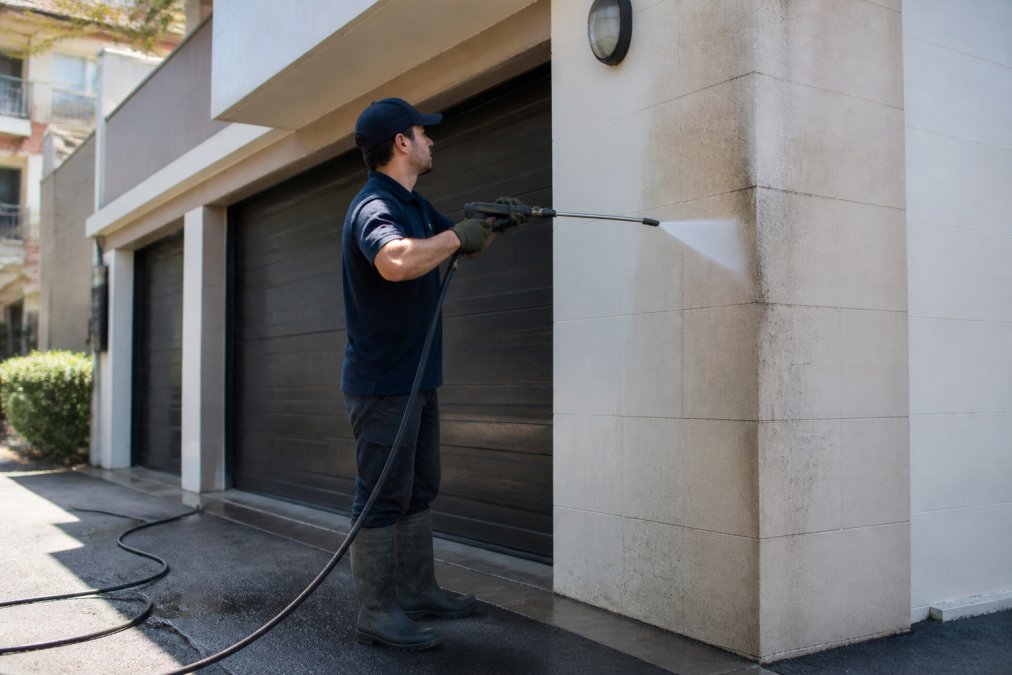
Getting the contractor selection process right protects your budget, your compliance position and your building’s long-term value. Sydney Pressure Washing Service works with strata committees across exterior cleaning, using trade-licensed teams, biodegradable solutions and both high-pressure and soft washing methods safe for roofs, timber and concrete. If your committee needs a compliant, insured contractor for exterior maintenance, request a free quote from Sydney Pressure Washing Service and get the scope, licensing and pricing sorted in one step.
Frequently Asked Questions
What qualifications should a strata maintenance contractor hold?
A strata maintenance contractor should hold a current trade licence for their specific trade, such as plumbing, electrical, or cleaning. They must also have public liability insurance and, where required, professional indemnity cover. For work on common property, they should be able to provide a certificate of currency for their insurance and demonstrate knowledge of Work Health and Safety (WHS) regulations. Ask for their licence number and verify it with the relevant state authority before signing any contract.
How do you ensure a contractor complies with WHS regulations?
Start by requesting their WHS management plan or safe work method statements for the tasks they will perform. Check that they have a current WHS induction for the site and that their workers hold relevant high-risk work licences if needed. During the job, confirm they use appropriate personal protective equipment and follow safe work practices. Include a clause in the contract requiring compliance with WHS laws and the right to audit their safety documentation. Regular site inspections by the strata committee help maintain accountability.
Should you get multiple quotes for strata maintenance work?
Yes, obtaining at least three written quotes is standard practice for strata maintenance. It gives the strata committee a clear picture of market rates and helps ensure value for money. When requesting quotes, provide the same detailed scope of work to each contractor so you can compare like for like. Ask each contractor to break down labour, materials, and any subcontractor costs. Remember that the cheapest quote is not always the best; consider the contractor’s experience, insurance, and references alongside price.
How do you handle performance issues with a strata contractor?
First, review the service level agreement and contract terms to identify the specific breach. Document the issue with dates, photos, and any correspondence. Notify the contractor in writing and request a rectification plan within a set timeframe. If the problem persists, escalate to a formal meeting with the strata committee. The contract should include a termination clause and dispute resolution process. For serious or repeated failures, seek legal advice on terminating the agreement and engaging a replacement contractor.
