
Table of Contents
- Why Hiring Insured Exterior Cleaning Contractors Protects Your Property
- Public Liability Insurance for Cleaning Contractors: What Cover You Need to See
- The Real Risks of Hiring Uninsured Contractors
- Questions to Ask Before Hiring a Cleaner or Exterior Contractor
- How to Hire an Insured Exterior Cleaning Contractor: Step by Step
- Red Flags and Common Mistakes When Vetting Contractors
- Conclusion
- Frequently Asked Questions
Last Updated: September 25, 2026
Why Hiring Insured Exterior Cleaning Contractors Protects Your Property
Hiring insured exterior cleaning contractors is the most effective way to protect your property from financial liability when something goes wrong. This guide breaks down what to check before anyone touches your roof, driveway, or cladding.
Here’s the uncomfortable truth most quotes don’t mention: if an uninsured worker falls from your roof or damages your neighbour’s property, the claim can land on you. The Safe Work Australia guidance on work health and safety duties makes clear that property owners can share responsibility for site safety. That’s not a reason to avoid exterior cleaning. It’s a reason to vet who you hire.
Below, we’ll show you how to verify cover, what each policy pays for, and the questions that separate a professional from a weekend operation.
Public Liability Insurance for Cleaning Contractors: What Cover You Need to See
Public liability insurance for cleaning contractors covers injury to third parties and damage to their property while work is carried out. For exterior cleaning, this is the baseline policy you must confirm before anyone starts.
The cover needs to match the risk: cleaning a single-storey driveway carries less exposure than soft washing a two-storey roof above a neighbour’s garden. Ask for a certificate of currency and check the liability limit against the job. A token limit won’t help when a high-pressure hose damages rendered walls or a chemical mix strips paint from a fence.
Liability Versus Property Damage: What Each Policy Actually Covers
These two are often confused, and the difference matters when you’re making a claim.
- Public liability responds to injury or damage suffered by other people, a passerby, a neighbour, their vehicle or their landscaping.
- Property damage cover (sometimes bundled within a broader policy) responds to damage to the property being worked on, your own home.
A contractor can hold public liability and still leave you exposed if their work damages your roof tiles. Ask whether their policy extends to damage of the property under service, not just third-party claims. If it doesn’t, that gap is yours to carry.
How to Verify a Certificate of Currency and Liability Limits
A certificate of currency is a document from the insurer confirming a policy is active on a given date. It is not a quote, an invoice, or a screenshot of an old certificate. Most homeowners stop at ‘send me your certificate’ and never verify it. That’s the gap this section closes.
Step 1, Read the certificate itself, not a photo of a folder. A genuine certificate lists the insurer’s name and logo, the policy number, the insured entity’s legal name, the policy period, the type of cover, and the liability limit. If any field is missing or blurred, ask for a clean copy.
Step 2, Match the insured name to the entity quoting you. This is the most common failure point. A certificate naming ‘J.
A common mistake is accepting a certificate that names a different business, or one that expired months ago. If the name on the certificate doesn’t match the contractor in front of you, the cover may not apply to your job at all.
What to Do If the Cover Doesn’t Stack Up
If a contractor can’t produce a current certificate, or the name doesn’t match, don’t negotiate, move to the next quote. Finding a properly insured contractor costs a few extra phone calls; an uninsured incident can run into tens of thousands in medical, legal and repair bills. Treat the certificate as a pass/fail gate, not a box to tick.
The Real Risks of Hiring Uninsured Contractors
The financial risk of hiring uninsured contractors sits with you, not them. If a worker is injured on your property, you can face claims for medical costs, lost income, and legal expenses. If equipment damages a neighbouring property, you may be the one negotiating with their insurer.
Subcontractor Risks and Why They Matter to You
Here’s the part most homeowners never ask about: many contractors subcontract the actual work. The person who quoted you may not be the person on your roof.
Questions to Ask Before Hiring a Cleaner or Exterior Contractor
These questions will surface almost every hidden risk in under five minutes. Ask them before you compare quotes, not after.
- Are you fully insured, and can you send a current certificate of currency?
- Does your cover include property damage to my home, not just third-party liability?
- Will subcontractors be used, and are they covered too?
- Do you hold working at heights certification for roof work?
- Are your staff police checked?
- What cleaning method will you use for each surface, and is it safe for that material?
- Can you provide before-and-after photos from similar properties?
- What’s your process if my plants or surfaces are damaged?
How to Hire an Insured Exterior Cleaning Contractor: Step by Step
Follow these steps in order. Skipping one is how people end up paying twice: once for the cheap job, and again to fix it.
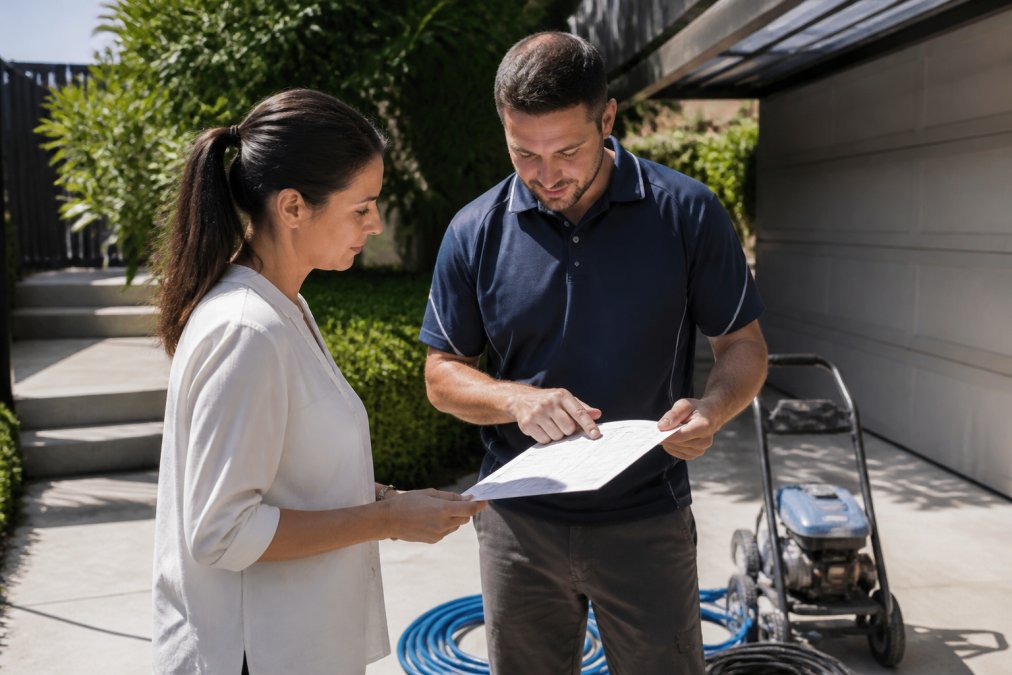
- Request quotes from at least three contractors. Compare what each includes, not just price.
- Ask for the certificate of currency from each. Verify the policy holder name, limit, and expiry date using the five-step process above.
- Confirm property damage cover and subcontractor cover. Get it in writing.
- Check licensing and certifications. For roof work, confirm working at heights certification. For chemical use, ask about chemical safety and surface protection.
- Request a written scope of work. It should list each surface, the method, and the expected outcome.
- Sign a service agreement. See below for what it should contain.
- Confirm the start date and duration. Plan for a clear window, not a vague “sometime this week.”
Ask to see the certificate of currency before you sign anything, not on the day of the job. Contractors who are properly insured will send it within the hour. The ones who stall usually have a reason.
Contractual Protections and Service Agreements Worth Requesting
A written service agreement is your contractual protection if something goes wrong. Verbal assurances, texts and handwritten quotes rarely survive a dispute. The agreement should specify:
- The exact scope of work and surfaces covered. List every surface by name: driveway, roof, gutters, cladding, windows, paths. A vague ‘exterior clean’ leaves room for argument.
- The cleaning method for each surface. Pressure washing, soft washing, or hand cleaning. The wrong method causes damage, so lock in what was promised.
- Insurance details, including policy numbers. Write the insurer’s name, policy number, liability limit and expiry date into the agreement. This makes cover a contractual term, not a marketing claim.
- Who is liable for damage to plants, surfaces, or neighbouring property. State that the contractor is responsible for pre-existing damage reporting, protecting garden beds and neighbouring property, and repair or compensation if damage occurs.
- The dispute resolution process. A simple clause requiring both parties to attempt resolution in writing before escalating creates a paper trail.
- Payment terms and deposit limits. Avoid large upfront cash deposits. A modest booking deposit with the balance payable on satisfactory completion is standard.
Subcontractor Risks and Why They Matter to You
Insurance is held by the entity named on the certificate, not the brand on the van. If a contractor sends a subcontractor whose policy has lapsed, or who has none, the cover you verified may not extend to the person doing the work. If that subcontractor is injured on your property, liability can trace back to you under work health and safety duties.
Red Flags and Common Mistakes When Vetting Contractors
The biggest mistake is treating price as the primary filter. A quote dramatically lower than the others usually means something was left out: insurance, training, or both.
Watch for these red flags:
- No certificate of currency, or one that names a different business
- Reluctance to put anything in writing
- No fixed business address or ABN
- Pressure to pay a large deposit upfront in cash
- No working at heights certification for roof work
- Vague answers about which chemicals will be used
- No before-and-after examples from comparable properties
The single most reliable signal of a professional exterior cleaning contractor is a willingness to document everything: cover, scope, method, and liability. If they’ll put it in writing, they’re likely to stand behind it.
Conclusion
Vetting a contractor properly takes an afternoon. Skipping it can cost you a legal claim, damaged surfaces, or mould that returns within months. The cover, certifications, and written agreement separate a safe job from an expensive lesson.
Frequently Asked Questions
What types of insurance should exterior cleaning contractors have?
At minimum, a contractor should hold public liability insurance, which covers injury to people or damage to third-party property during the job. If they employ staff, they also need workers compensation cover. For work at height, such as roof cleaning, confirm they carry working at heights certification and that their policy is current. Ask for a certificate of currency and check the liability limits match the size and risk of your property.
How do I verify a contractor’s insurance certificate?
Request the certificate of currency directly from the contractor, then contact the insurer listed on it to confirm the policy is active and the liability limits are accurate. Check the policy expiry date and that the business name matches the quote. For strata or commercial work, ask whether subcontractors are covered under the same policy. A genuine contractor will provide this without hesitation.
What happens if a contractor damages my property without insurance?
If an uninsured contractor damages your home, you may have to claim on your own home insurance or pursue the contractor personally through civil action. Recovery can be slow and uncertain if the business has limited assets. This is one of the clearest risks of hiring uninsured contractors: the financial burden shifts to you, the property owner, even when the damage was not your fault.
Are strata properties required to use insured contractors?
Strata committees have a duty of care to maintain common property, and engaging uninsured contractors exposes the owners corporation to liability if something goes wrong. Most strata managers now require a certificate of currency before approving any exterior cleaning work. Confirm the contractor also has working at heights certification for roof or high-level cleaning, and that a service agreement sets out insurance and safety obligations.
