
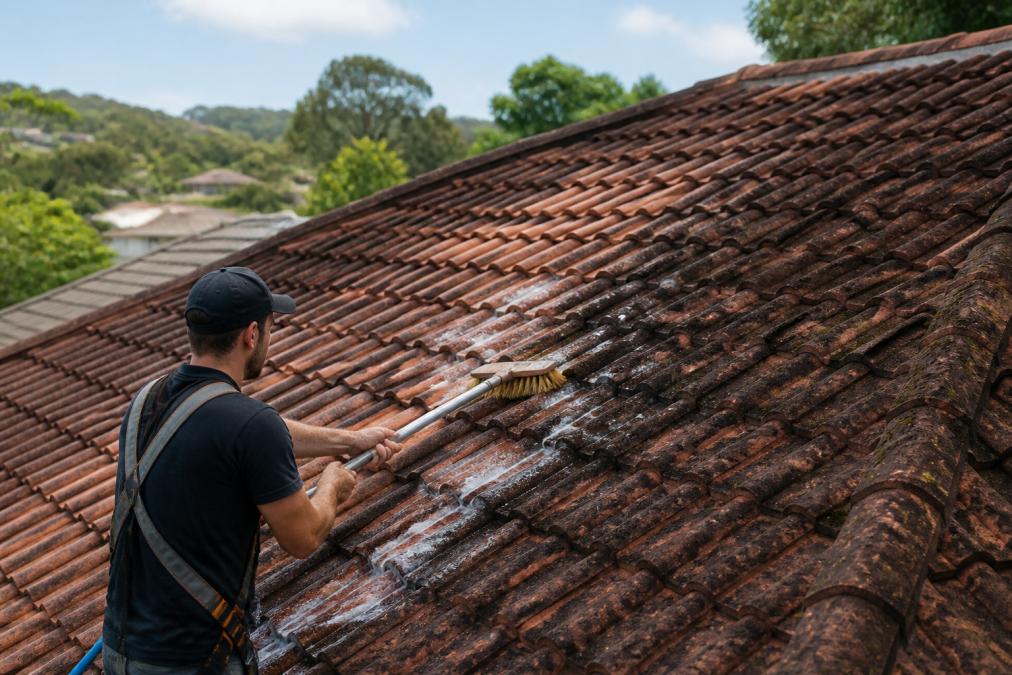
Table of Contents
- Why Pressure Washing Damages Roof Tiles
- Best Roof Cleaning Solution for Mould
- Tools and Equipment for Soft Washing Roof Tiles
- Step-by-Step: How to Clean Roof Tiles Without Pressure Washing
- How to Remove Lichen From Roof Tiles
- DIY Roof Tile Cleaning Safety Tips
- How Often Should You Clean Roof Tiles?
- When to Hire a Professional Roof Cleaner
- Frequently Asked Questions
Last Updated: September 16, 2026
Why Pressure Washing Damages Roof Tiles
A pressure washer forces water at up to 4,000 psi into a surface never engineered to resist it. Roof tiles shed rain, not directed jets, and that difference destroys them.
The damage is rarely dramatic at first. High pressure strips the glaze from terracotta and erodes the surface of concrete tiles, leaving them chalky and porous. Water forced under overlapping tiles lifts them out of position, and once the interlock breaks, the next storm drives water into your ceiling cavity.
Then there’s the safety problem. Blasting a roof sends a slurry of water, tile fragments and chemicals off the edge at speed, onto your gutters, garden beds and your neighbour’s car.
The alternative is soft washing: low pressure, around 100 to 500 psi, combined with a cleaning solution that does the work instead of brute force.
Best Roof Cleaning Solution for Mould
The best roof cleaning solution for mould is a diluted sodium hypochlorite mix, applied at low pressure and left to dwell. It kills the mould at the root rather than bleaching the stain, so growth doesn’t return within months.
Mould, algae and lichen feed on moisture and the organic film on shaded roof slopes. Killing the organism matters more than removing its colour, a bleach-only approach lightens the stain and leaves the root intact.
Material-Specific Chemical Compatibility
Not every tile tolerates the same chemistry. The wrong mix can etch, stain or soften the surface long before the mould dies.
Terracotta and other unglazed clay tiles are porous and slightly alkaline. They tolerate diluted sodium hypochlorite well, but strong acids, including full-strength vinegar, leach iron and other minerals out of the clay, leaving a permanent rust-coloured bloom. Keep acid cleaners off terracotta entirely. A 1 to 2 percent hypochlorite dilution is the safe ceiling for routine work; stronger mixes drive salts into the tile body, which effloresce as white powder for months.
Concrete and cement tiles are alkaline and forgiving. They handle 3 to 4 percent hypochlorite for heavy black mould, and they’re the one common tile type where a mild acid wash (oxalic or citric) lifts mineral staining, but only after the hypochlorite has fully rinsed away, never in the same pass. Mixing the two releases chlorine gas.
Slate is acid-resistant but sensitive to high pressure and to strong alkalis over time. Low-dilution hypochlorite is fine; avoid caustic soda-based moss killers, which dull the surface. Softer slate varieties flake if scrubbed wet and aggressively.
Colorbond and other pre-painted steel roofs aren’t tiles, but appear in the same cleaning jobs. The factory paint is sensitive to strong solvents and hypochlorite above about 1 percent. A manufacturer-approved cleaner or very mild detergent is safer than a bleach mix. Never use abrasive brushes on Colorbond; they scratch the paint and void the warranty.
Glazed ceramic tiles are the most chemical-tolerant but the least tolerant of physical abrasion. The glaze resists hypochlorite, but a stiff brush or a pressure jet will craze it. Soft bristles only.
Never mix sodium hypochlorite with ammonia, vinegar or any acid-based cleaner. The reaction releases toxic chlorine gas. If you’re unsure what’s already on the roof, rinse thoroughly with plain water first.
Mixing a Safe Sodium Hypochlorite Solution
Sodium hypochlorite is the active ingredient in most professional roof treatments. Start at a 1 to 3 percent dilution for routine maintenance, strengthened to around 4 percent for heavy black mould on concrete tiles, but check the tile material first against the compatibility notes above.
Mix it in a plastic bucket or sprayer, never metal, adding the hypochlorite to water, not the reverse.
Homemade Options: Vinegar and Mild Dish Soap
A vinegar solution, roughly one part white vinegar to one part water, with a squirt of mild dish soap, handles light algae and surface grime. It’s biodegradable, cheap and safe around pets once dry.
Tools and Equipment for Soft Washing Roof Tiles
Soft washing a roof needs far less equipment than pressure washing, but the right gear matters. A pump-up garden sprayer or low-pressure chemical sprayer handles small roofs; for anything larger, a 12-volt or battery-powered soft wash pump with a telescopic wand lets you work from the ground or gutter line.
You’ll also need:
- A soft-bristle brush for spot-treating lichen and moss
- A leaf blower or soft broom for debris removal
- A fall-arrest harness and anchor point rated for roof work
- Chemical-resistant gloves, goggles and a respirator
- Drop sheets or plastic sheeting to protect gutters and plants
- A garden hose with a standard nozzle for the rinse cycle
Step-by-Step: How to Clean Roof Tiles Without Pressure Washing
Cleaning roof tiles without pressure washing comes down to four stages: clear the debris, apply the solution, let it dwell, then rinse. Rushing any stage, particularly the dwell time, is why DIY jobs fail.
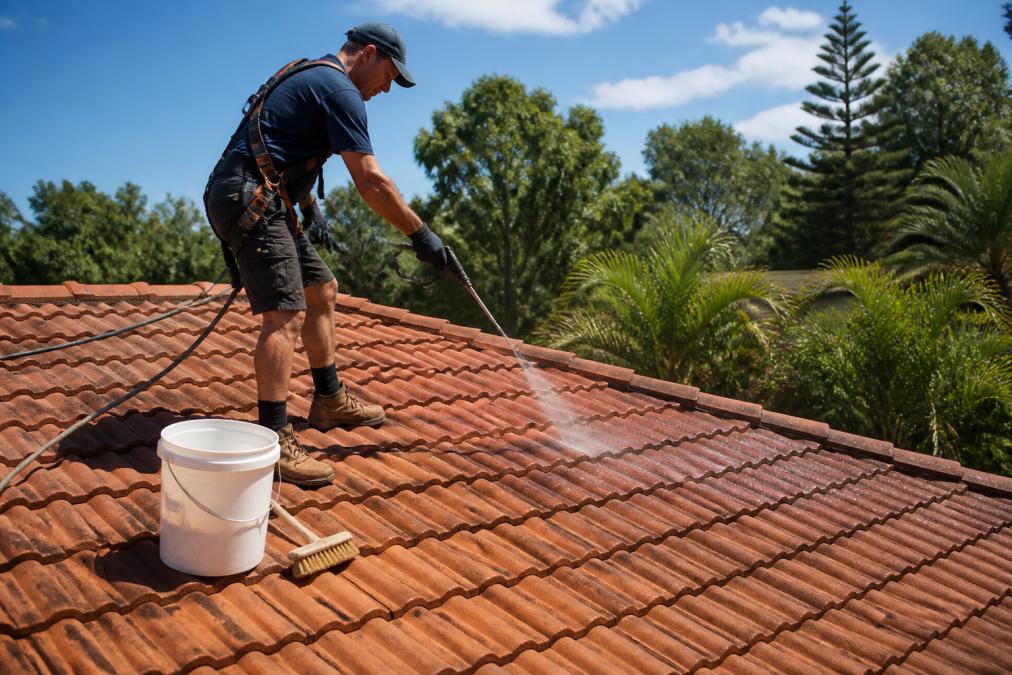
Debris Removal and Gutter Protection
Start by clearing leaves, twigs and built-up debris from the roof surface and gutters with a leaf blower on low or a soft broom. This stops organic matter from neutralising your cleaning solution before it reaches the mould.
Applying, Dwelling, and Rinsing
Work from the bottom of the slope upward, applying the solution in overlapping passes. Spraying downhill first prevents streaking, since the solution won’t run over dry, untreated tiles.
Apply your solution on an overcast, still day. Direct sun dries the mix before it can work, and wind carries spray onto neighbouring properties and cars.
How to Remove Lichen From Roof Tiles
Lichen is the toughest growth to shift because it grips the tile with root-like structures called rhizines. Unlike mould, which sits on the surface, lichen penetrates the top layer and anchors itself. A soft wash alone often won’t remove it; you need a fungicide treatment plus manual scrubbing, and a longer timeline than most guides admit.
Why Lichen Is Different From Mould and Algae
Mould and algae are simple organisms feeding on surface moisture and organic film. Lichen is a composite organism, a fungus partnered with an alga or cyanobacterium. The fungus provides structure and anchorage; the alga photosynthesises and feeds the pair. This symbiosis makes lichen resilient to drying, UV and many chemicals that kill mould outright.
Treatment and Removal Process
Treat lichen with a dedicated fungicide or stronger sodium hypochlorite, around 4 percent for concrete, lower for terracotta and Colorbond. Apply in the late afternoon so it dwells overnight in cooler, damper conditions rather than evaporating in direct sun.
Material-Specific Risks
On terracotta, lichen rhizines can penetrate deeply enough that removal leaves a permanent pitted mark. The tile is structurally fine, but the surface texture is changed, a strong argument for preventative treatment rather than reactive removal on older clay roofs.
Prevention Beats Removal
Preventative treatment matters more than removal. Lichen returns to shaded, damp slopes, so trimming overhanging branches and improving airflow does more long-term good than any chemical. A residual fungicide or purpose-made roof sealant after cleaning slows recolonisation, though no coating is permanent.
DIY Roof Tile Cleaning Safety Tips
Roof work is one of the highest-risk jobs a homeowner can attempt. Falls from height are the leading cause of death on Australian worksites, and a domestic roof offers no margin for error.
- Never walk on a wet or mossy roof; the surface is slippery even on a shallow slope
- Use a fall-arrest harness anchored to a rated point, or work from a stable ladder platform
- Keep three points of contact when moving across the roof
- Wear non-slip footwear with soft soles that grip tile without cracking it
- Never work alone, and never in wet or windy conditions
- Check for loose or cracked tiles as you go; a soft wash can dislodge a tile already failing
- Wear eye protection and a respirator when spraying chemicals overhead
How Often Should You Clean Roof Tiles?
Most homes need a roof clean every 18 months to three years, depending on shade, tree cover and rainfall. Homes surrounded by trees or on a shaded southern slope may need annual attention.
Signs it’s time:
- Black or green streaking across tiles
- Visible moss or lichen patches
- Debris building up in valleys and gutters
- Granule loss or a chalky white residue on concrete tiles
When to Hire a Professional Roof Cleaner
Hire a professional when your roof is steep, double-storey, heavily affected by lichen, or you don’t want to risk a fall. Soft washing is safer than pressure washing, but it still means working at height with chemicals.
Frequently Asked Questions
What is the best thing to clean roof tiles with?
A low-pressure soft wash using a sodium hypochlorite solution is the most effective method for clean roof tiles. Mix one part sodium hypochlorite with three parts water, apply with a garden sprayer, let it dwell for 15 to 20 minutes, then rinse gently. For a milder approach, use a vinegar solution or mild dish soap with warm water. Avoid high-pressure washing, which forces water under tiles and strips protective coatings.
Is it safe to walk on roof tiles during cleaning?
Walking on roof tiles is risky, especially on wet or steep surfaces. Use fall protection such as a harness anchored to a secure point, wear non-slip shoes, and avoid stepping on cracked or loose tiles. If your roof slope exceeds 30 degrees or you lack height experience, hire a trade-licensed professional. Tiled roofs become extremely slippery when wet, and a fall can cause serious injury.
How do I prevent mould regrowth on roof tiles?
Prevent mould regrowth by applying a residual fungicide or sealant after cleaning. Trim overhanging tree branches to reduce shade and debris, and clear gutters regularly so water does not pool. In humid areas, schedule a preventative treatment every 12 to 18 months. Improving airflow across the roof surface also helps keep tiles dry and less hospitable to algae growth.
How often should you clean roof tiles?
Most tiled roofs need cleaning every 18 to 24 months, depending on tree cover, rainfall, and shade. Homes surrounded by trees or in humid areas may need annual cleaning. Check for moss, lichen, or black streaks each autumn. Regular maintenance prevents algae growth from staining tiles and keeps gutters flowing freely, extending the roof’s lifespan.
Roof cleaning without a pressure washer takes longer, but it’s the only method that leaves your tiles intact. If your roof is steep, heavily mossed, or you’d rather not spend a weekend on a ladder, Sydney Pressure Washing Service can handle it with trade-licensed soft washing, biodegradable solutions, and a free quote upfront. Book your free quote and protect your roof for years to come.
