
Table of Contents
- Driveway Pressure Cleaning Price Per Square Metre Explained
- Factors Affecting Pressure Washing Costs
- How to Remove Oil Stains from Concrete Driveways
- How Often to Pressure Clean a Driveway
- What a Standard Driveway Cleaning Service Includes
- DIY vs Professional Driveway Pressure Cleaning
- Frequently Asked Questions
Last Updated: September 17, 2026
Driveway Pressure Cleaning Price Per Square Metre Explained
Driveway pressure cleaning is priced on either a square metre rate or an hourly labour cost, depending on the surface, staining, and access. At Sydney Pressure Washing Service, we can provide a quote for your job. A simple concrete clean on a flat block sits at the lower end; aggregate or paving with years of grime sits higher.
Most homeowners ask the same question first: what is the cost of driveway pressure cleaning? No single figure fits every property, size, surface and stain severity move the number more than anything else.
Here is the practical breakdown:
- Square metre rate: a set price per m², best for standard-shaped driveways
- Hourly labour cost: charged when the job is hard to measure or heavily stained
- Call-out fee: a flat charge to get equipment and a technician to your site
Below, we explain how each pricing model works and which one suits your driveway.
Square Metre Rate vs Hourly Labour Cost
A square metre rate suits open, easy-to-reach driveways with light to moderate dirt, and gives you a fixed quote with no surprises if the job runs long.
An hourly rate suits complex jobs, tight side access, steep slopes, or heavy oil staining needing chemical treatment and dwell time, and bills for actual time on site.
If your driveway is a standard rectangle with normal grime, ask for a square metre rate.
Small, Medium and Large Driveway Pricing Tiers
Providers may group driveways into size bands, which can give a rough idea before a site inspection.
| Driveway Size | Typical Area | Pricing Basis | What Drives the Price |
|---|---|---|---|
| Small | Single car space | Lower square metre rate | Quick clean, minimal prep |
| Medium | Double car space | Mid square metre rate | More surface, some staining |
| Large | Long or circular drive | Higher square metre rate | Time, water and equipment use |
Factors Affecting Pressure Washing Costs
Several factors affect pressure washing costs, and understanding them helps you read a quote with confidence. Surface type matters most, followed by staining, access, and the chemicals or follow-up work needed. Below is how each factor actually moves the number.
Surface Type: Concrete, Aggregate and Pavers
Surface porosity is the single biggest driver of labour and chemical cost. The rougher and more absorbent the surface, the slower the pass and the more product it drinks.
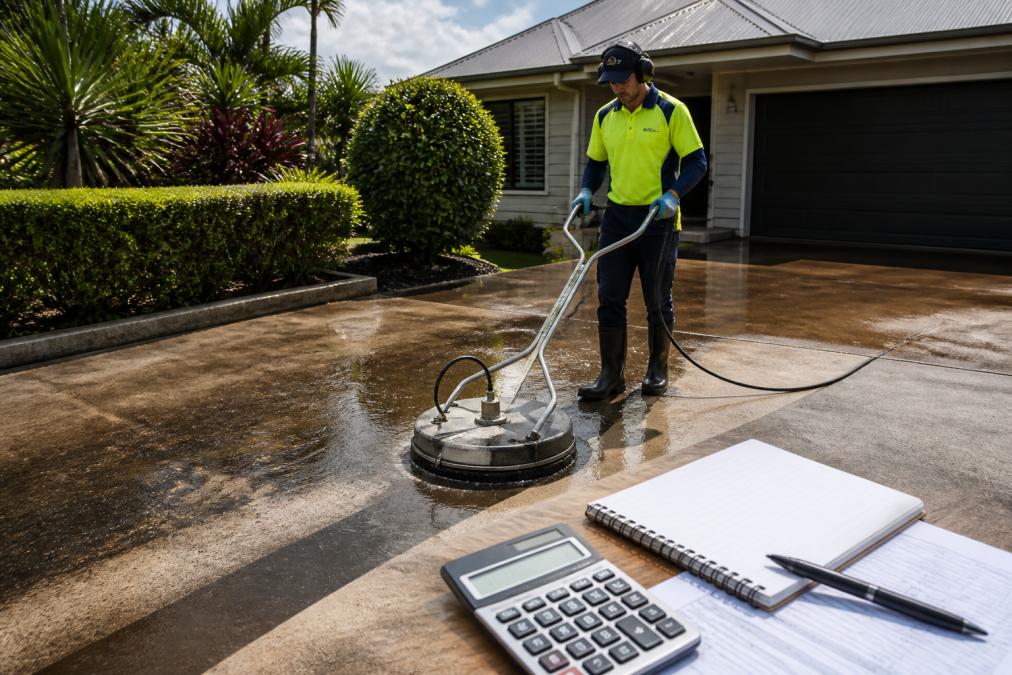
- Concrete (smooth, sealed or broom-finished): the cheapest surface to clean. A surface cleaner attachment glides across it, coverage is fast, and water use is low.
- Exposed aggregate: rough and porous, so dirt settles into the texture. It needs slower passes, more water, and often a pre-treatment.
- Pavers: the most labour-intensive of the three. Joint sand can wash out under high pressure, so a technician works at reduced pressure and may need to re-sand the joints afterwards.
- Sealed or painted surfaces: need lower pressure and the right nozzle to avoid stripping the coating. If the seal is already failing, cleaning can accelerate flaking.
Stain Severity and Removal Surcharges
Light dirt and dust come off with water alone. Heavier problems need chemicals, dwell time, and sometimes a return visit, that is what a surcharge pays for: the time and product, not the water.
- Mould and mildew: treated with a chemical wash, then rinsed.
- Oil stains: need a degreaser and dwell time before extraction. Fresh oil may require less treatment; set-in oil soaked into porous concrete may need a second treatment.
- Rust and tannin marks: often need a specialist acid-based or chelating treatment, and sometimes a second visit once the surface dries.
- Paint, render or mortar splatter: mechanical removal or a solvent, plus care not to etch the surface underneath.
Access, Slope and Drainage
Access is the quiet cost driver most quotes only mention at the site visit.
- Tight side access: if the technician cannot get a surface cleaner or hose reel to the driveway easily, the job takes longer and may need a smaller, slower setup.
- Steep slopes: slow the surface cleaner and increase the risk of runoff pooling, so passes take longer.
- Poor drainage: pooled water must be managed rather than left to flow, adding time and sometimes a wet-vac step.
- Obstructions: parked cars, pot plants, bins and garden beds all need to be moved or worked around.
Water, Chemicals and Runoff
Water use and chemical choice affect both cost and compliance. Operators under water restrictions or on stormwater-sensitive sites may need low-flow equipment, runoff capture, or biodegradable solutions, choices that add time, and that time shows up in the quote. Ask any provider how they manage runoff and what products they use, because a cheap quote that ignores runoff is not a like-for-like comparison.
Ask for a site inspection before you accept a quote. A photo can hide how deep a stain has set into porous concrete, and that is exactly what changes the final price.
How to Remove Oil Stains from Concrete Driveways
Oil stains need a different approach to general grime. High pressure alone pushes oil deeper into concrete. You have to lift it out with a degreaser first.
Here is the process a trained technician follows:
- Soak up any fresh oil with an absorbent material
- Apply a degreasing agent to the stain
- Let it dwell so it breaks down the oil
- Agitate the area with a stiff brush
- Rinse with controlled pressure
- Repeat on older, set-in stains
How Often to Pressure Clean a Driveway
Most driveways need a professional clean every 12 to 18 months. High-traffic homes, shaded blocks and areas near trees may need it every 6 to 12 months. But the more useful question is whether regular maintenance is beneficial compared to waiting and doing one big restoration.
Why Frequency Affects Price, Not Just Appearance
Grime does not sit on a driveway, it bonds to it. Organic growth (mould, algae, lichen) roots into porous surfaces and joint sand, while oil and tannins soak deeper over time. The job then shifts from a fast surface clean to a slower, chemical-heavy treatment, sometimes with a second visit.
A Simple Cost-Benefit Way to Think About It
Think in job types:
- Annual or biennial maintenance clean: light soil, single pass.
- One-off deep clean after several years: heavy soil, pre-treatment, longer dwell, possible second visit.
- Restoration after neglect: may include re-sanding paver joints, treating set-in oil, or addressing surface damage.
A regular clean can help maintain the surface. Neglecting it may lead to more extensive cleaning requirements.
Signs It Is Time to Book
- Dark patches that do not shift with rain
- Green or black growth in the joints
- A dull, grey look across the whole slab
- Slippery sections after wet weather
- Rust or oil marks that have darkened since you first noticed them
Matching Frequency to Your Property
- Shaded blocks and north-facing driveways that stay damp: often 6 to 12 months, because mould and algae establish faster.
- Driveways under or near trees: 6 to 12 months, because tannin and leaf litter stain quickly.
- Exposed, sunlit concrete with light traffic: 12 to 18 months is usually enough.
- Paved driveways with joint sand: keep to the shorter end, because organic growth in the joints loosens the bedding over time.
A yearly clean keeps your driveway looking sharp and protects the surface. Waiting three or four years usually means a bigger, pricier job, and sometimes re-sanding or resealing on top.
What a Standard Driveway Cleaning Service Includes
A standard service covers more than a quick spray. Knowing what is included helps you compare quotes fairly.
Most jobs include:
- A site inspection and surface check
- Pre-treatment of mould, mildew and stains
- High-pressure cleaning with the right nozzle for the surface
- A surface cleaner attachment for even coverage
- Post-clean rinse and tidy-up
DIY vs Professional Driveway Pressure Cleaning
DIY may seem cost-effective, but it involves equipment rental, detergent, and your time. Rented units may also differ in power from commercial-grade equipment.
Professional cleaning offers:
- Trade-licensed operators who match pressure to the surface
- Commercial equipment
- Biodegradable solutions and safe water management
Using too much pressure on pavers can wash out the joint sand. That leaves the pavers loose and unstable, and re-sanding adds cost you did not plan for.
Frequently Asked Questions
How much do people charge for pressure cleaning driveways?
Pricing depends on driveway size, surface type and stain severity, so there is no single figure. Most quotes combine a square metre rate with a service call-out fee, and heavily stained or porous surfaces attract a surcharge. Rather than rely on a generic number, request a site inspection so the quote reflects your actual driveway. A written cost estimate should itemise surface preparation, chemical treatment and any sealing or protection work.
Does the type of driveway surface affect cleaning costs?
Yes. Concrete cleaning is usually the most straightforward because the surface is relatively smooth and uniform. Aggregate driveway surfaces and exposed pebble finishes are more porous, so they need lower pressure settings, more chemical treatment and a slower pass, which adds labour time. Paver restoration often includes re-sanding joints, and sealing and protection is a separate line item. Mention your surface type when requesting a quote so the provider can match pressure settings and nozzle types correctly.
Is it more cost-effective to hire a professional or DIY?
DIY involves equipment rental, degreasing agents, water usage and the risk of surface damage. A hired high-pressure water jet used at the wrong pressure settings can strip concrete, etch pavers or force water behind cladding. Professional operators carry commercial grade equipment, surface cleaner attachments and trade licensing, and they manage water runoff responsibly. For a one-off clean on a small, lightly soiled driveway, DIY may be reasonable. For larger areas, delicate surfaces or oil stain removal, professional cleaning can deliver effective results.
How often should a driveway be pressure cleaned to maintain value?
For most homes, a deep clean every 12 to 18 months keeps mould, mildew and grime from becoming embedded. Driveways under trees or in shaded, damp positions may need cleaning every 6 to 12 months because mould and mildew removal becomes harder once growth sets in. If you are preparing a property for sale, schedule a clean within a few weeks of listing so property curb appeal is at its peak. Regular preventative maintenance is cheaper than restoring a neglected surface later.
