
Table of Contents
- What Is Soft Washing and Why It Works on Delicate Surfaces
- Pressure Washing vs Soft Washing: Which Method Protects Your Property?
- Surfaces That Need Delicate Cleaning: Render, Cladding, Timber and More
- Soft Washing Services Sydney: What a Professional Job Involves
- Professional House Washing Cost Sydney: What Affects Your Quote
- DIY vs Professional Risk Assessment: When to Call a Trade-Licensed Team
- Maintenance Schedules and Environmental Compliance for Delicate Surfaces
- Frequently Asked Questions
Last Updated: September 18, 2026
What Is Soft Washing and Why It Works on Delicate Surfaces
Soft washing is a low-pressure exterior cleaning method that combines water at gentle pressure with biodegradable cleaning solutions to remove mould, algae and grime without damaging the surface, making it ideal for cleaning delicate surfaces. This guide from Sydney Pressure Washing Service explains how the technique protects render, cladding and timber where high-pressure water would cause harm.
The method works because it treats the contamination rather than blasting it off. A soft wash applies a diluted cleaning solution, lets it dwell, then rinses at low pressure. The Safe Work Australia guidance on managing risks reinforces why matching the method to the material matters: the wrong approach creates a hazard, not just a mess.
How Low-Pressure Water and Biocides Remove Mould and Algae
Biocides kill mould and algae at the root, while low-pressure water rinses the residue away. Surfactants in the mix break the bond between grime and the surface, so the growth lifts without scrubbing.
Pressure alone only strips the visible layer. Regrowth follows within months because the organism survives underneath. A soft wash with a suitable biocide addresses the cause, which is why cleaning delicate surfaces properly takes patience rather than force.
The dwell time matters more than the pressure setting. A solution left to work for the correct contact period removes more growth than a stronger mix rinsed off too quickly.
Pressure Washing vs Soft Washing: Which Method Protects Your Property?
Soft washing protects delicate surfaces; pressure washing suits hard, durable materials only. The choice comes down to what the surface can tolerate, not how dirty it looks.
| Method | Pressure Range | Best For | Risk |
|---|---|---|---|
| Soft washing | Low pressure | Render, timber, painted surfaces | Minimal surface damage |
| Pressure washing | High pressure | Concrete, pavers, driveways | Strips paint, cracks render |
PSI Settings and Surface Integrity: What the Numbers Mean
PSI settings determine whether a surface survives the clean. High-pressure units can exceed what render, timber and painted cladding tolerate, forcing water behind the surface and into the wall cavity.
Water damage prevention starts with knowing the limit. Once moisture sits behind render or cladding, you are looking at repainting or repairs rather than a clean. Soft washing sidesteps that entirely by keeping pressure low and letting chemistry do the work.
Surfaces That Need Delicate Cleaning: Render, Cladding, Timber and More
Render, cladding, timber, terracotta and painted surfaces all require delicate cleaning. Each material reacts differently to pressure and chemicals, so the approach changes surface by surface.
- Render and stucco: Porous and prone to cracking under force; acrylic and cement renders also soften if left wet too long
- Cladding and vinyl siding: Can lift, warp or take on water behind the panel under high pressure
- Timber decking and painted surfaces: Stripped of finish by aggressive washing; oiled and stained timber needs a gentler mix than bare timber
- Terracotta and garden edging: Brittle and easily chipped, and highly sensitive to alkaline cleaners
- Eaves, gutters and fascia: Fragile fixings, trapped debris and painted metal that dulls under strong chemicals
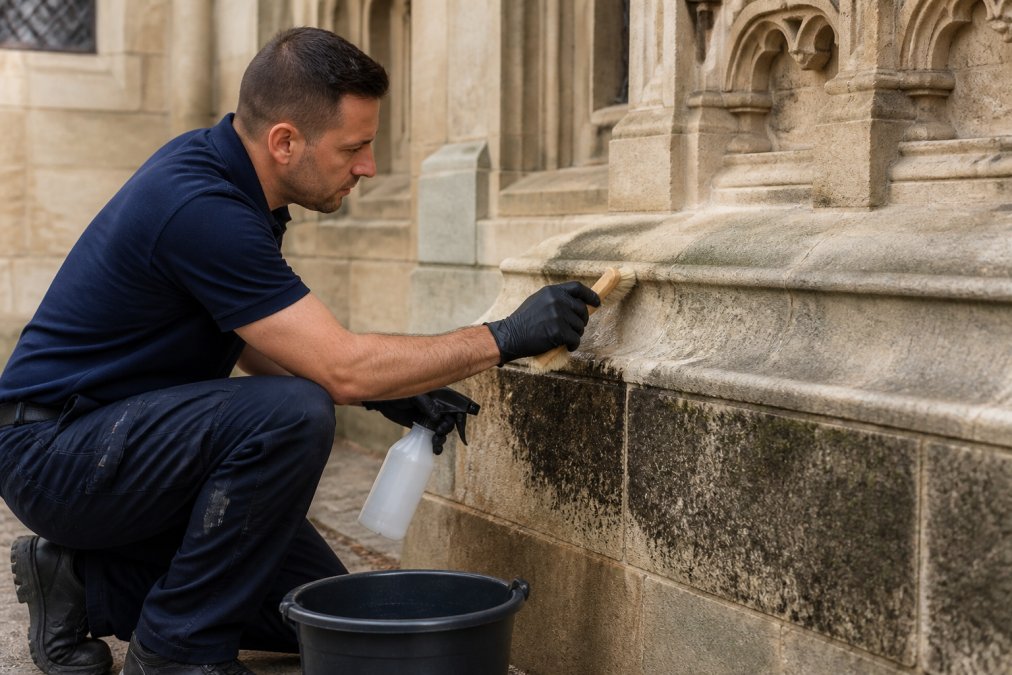
- Sandstone and natural stone: Soft, porous and easily etched by acidic solutions
Surface-Specific Chemical Safety for Render, Terracotta and Painted Surfaces
Chemical safety is surface-specific, and this is where most generic guides stop short. A mix that cleans concrete can etch terracotta, dull a painted finish or bleach a timber deck. The solution strength, the active ingredient and the dwell time all need to match the material.
A practical breakdown of what suits what:
- Cement and acrylic render: Tolerates a mild alkaline surfactant with a diluted sodium hypochlorite biocide. Keep the mix weak and rinse thoroughly, because render holds moisture and residual chemical keeps working after the job looks done.
- Painted cladding and painted timber: Use a neutral pH surfactant. Avoid strong hypochlorite on coloured paint, as it fades pigments and breaks down the binder over repeat washes.
- Terracotta, sandstone and other porous stone: Neutral or very mildly alkaline only. Acidic cleaners etch the surface permanently, and strong alkali draws salts to the surface and causes efflorescence.
- Bare and oiled timber: A dedicated timber cleaner or a mild oxygen-based surfactant. Chlorine-based biocides raise the grain and strip oil finishes.
- Metal fascia, gutters and downpipes: Mild surfactant, short dwell, immediate rinse. Prolonged contact with hypochlorite accelerates corrosion on Colorbond and galvanised steel.
Runoff is the other concern. Plants, pets and waterways sit close to most exterior walls, and a biocide that kills algae will harm garden beds if it is not managed. Pre-wet garden beds before the wash, cover or move pot plants, and rinse planting with fresh water afterwards. Neutralisers applied after the wash bring the surface back to a safe pH, which protects both the material and the garden around it.
Skipping the neutraliser is a common shortcut. Residual chemical keeps working on the surface and can discolour paint or damage nearby planting for weeks after the job looks finished.
Match the mix to the material before you match it to the stain. A weaker solution with the right dwell time is safer on render, paint and stone than a strong mix rinsed off in a hurry.
Soft Washing Services Sydney: What a Professional Job Involves
A professional soft wash follows a defined sequence: assess the surface, protect surrounding areas, apply the solution, allow dwell time, rinse at low pressure, then neutralise. Skipping any step shortens how long the result lasts.
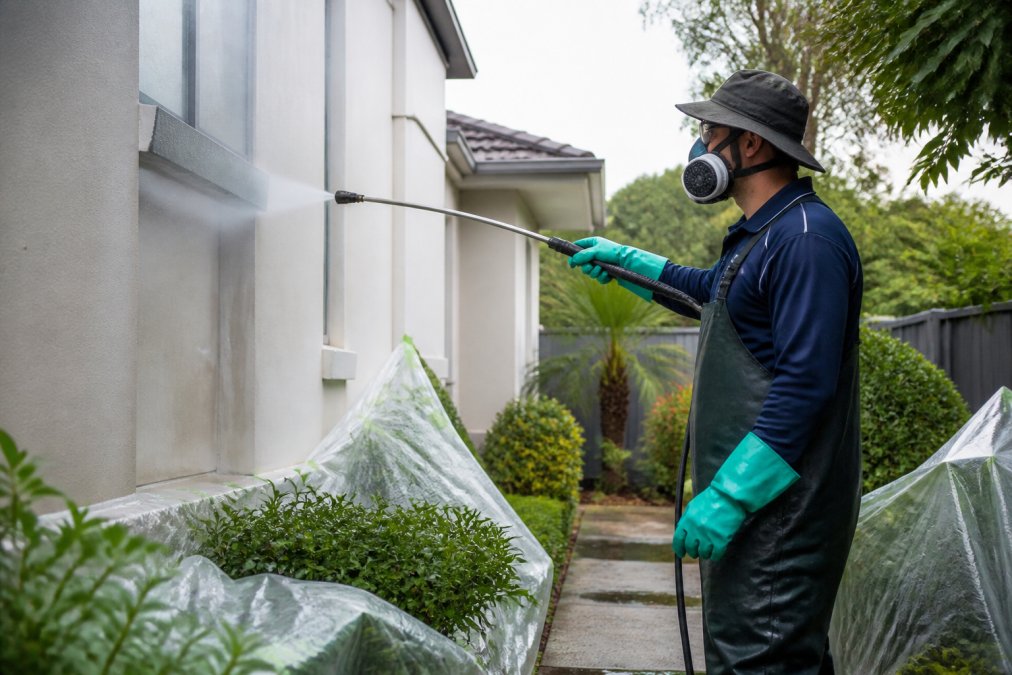
At Sydney Pressure Washing Service, the team uses biodegradable solutions and neutralisers across residential, strata and commercial properties, handling mixed surfaces in a single visit.
Professional House Washing Cost Sydney: What Affects Your Quote
House washing cost depends on property size, surface types, access and the level of growth. A single-storey home with light algae sits at one end; a multi-level property with heavy mould across render and cladding sits at the other.
The variables that move a quote most:
- Total surface area and number of storeys
- Mix of materials requiring different methods
- Severity of mould, algae or mildew
- Access constraints such as steep blocks or tight side passages
- Additional treatments like gutter clearing or neutralising
DIY vs Professional Risk Assessment: When to Call a Trade-Licensed Team
DIY soft washing works on a small, low-risk area. A single garden path, a ground-level fence panel or a low retaining wall is manageable with a rental unit and the right solution. Anything above head height, or any surface you are unsure about, is where the risk shifts.
- Can you identify the material with confidence? If you cannot tell render from painted cladding, or sandstone from concrete, you cannot choose a safe mix.
- Is the surface above ground level? Ladders, roof lines and second-storey walls turn a cleaning job into a working-at-heights risk.
- Is the growth heavy or recurring? Deep mould and algae usually mean the cause, a leak, poor drainage or constant shade, needs fixing first.
- Are there electrical fittings, air-conditioning units or solar panels nearby? Water and chemicals near these need isolation and care.
- Does runoff reach a garden bed, lawn or stormwater drain? That changes what you can legally use and where the water can go.
If the surface is above ground level, painted, or you cannot identify the material with confidence, the cost of a professional job is almost always lower than the cost of a repair.
Maintenance Schedules and Environmental Compliance for Delicate Surfaces
A maintenance schedule keeps delicate surfaces clean with less aggressive treatment over time. Most properties need a wash every 12 to 18 months, with shaded or north-facing walls on a shorter cycle because mould and mildew prevention is harder where moisture lingers.
Frequently Asked Questions
What is the safest method for cleaning delicate exterior surfaces?
Soft washing is the safest method for delicate exterior surfaces. It uses low-pressure water (under 500 PSI) combined with biodegradable cleaning solutions and biocides to break down mould, algae and grime without forcing water into the surface. This approach protects render, cladding, timber and painted finishes from damage while still delivering a deep clean. For best results, a trade-licensed technician will match the cleaning solution and pressure settings to each specific surface type.
Can I use a pressure washer on timber siding?
No. High-pressure water will strip timber fibres, open the grain, and force moisture into the wood, leading to rot and warping. Timber siding should only be cleaned with soft washing methods using low pressure and appropriate cleaning agents. If you have timber cladding, a professional soft washing service will use a gentle application of biodegradable solutions followed by a low-pressure rinse to remove mould and algae without damaging the wood.
How does soft washing differ from high-pressure cleaning?
Soft washing relies on chemical cleaning agents and low-pressure water (under 500 PSI) to kill and remove mould, algae and mildew at the root. Pressure washing uses high-pressure water (often 1,500 to 4,000 PSI) to blast away grime mechanically. Soft washing is safer for delicate surfaces like render, painted cladding, terracotta and timber, while pressure washing suits hard surfaces such as concrete driveways and pathways. Choosing the wrong method can cause permanent surface damage.
Are biodegradable cleaning solutions safe for garden plants?
Biodegradable cleaning solutions are designed to break down safely in the environment, but they can still affect garden plants if applied directly or allowed to pool around roots. Professional soft washing services take precautions by pre-wetting surrounding plants, covering sensitive garden beds, and rinsing surfaces thoroughly after treatment. This neutralises any residue and protects your landscaping. Always ask your provider about their plant protection process before work begins.
Delicate exterior surfaces reward the right method, not the strongest one. If your render, cladding or timber needs cleaning without the risk of damage, Sydney Pressure Washing Service brings trade-licensed technicians, biodegradable solutions and neutralisers to every job, handling mixed surfaces in a single visit. Get a free quote from Sydney Pressure Washing Service and restore your property’s appearance without putting your surfaces at risk.
