
Table of Contents
- What Is Residential Soft Wash Cleaning?
- Soft Wash vs Pressure Wash: Key Differences
- Surfaces Safe for Soft Washing (And What to Avoid)
- House Washing Cost Sydney: What Affects Your Quote
- Protecting Garden Plants During Soft Washing
- Professional House Washing Frequency and Seasonal Timing
- DIY vs Professional Soft Washing: A Risk Assessment
- Frequently Asked Questions
Last Updated: September 12, 2026
What Is Residential Soft Wash Cleaning?
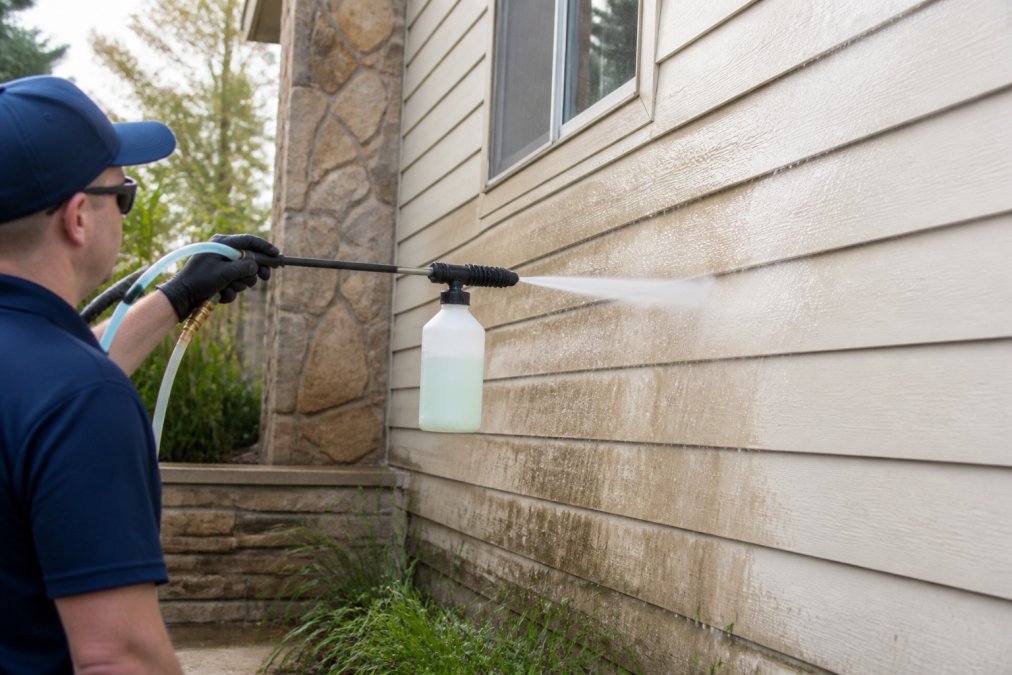
Residential soft wash cleaning is a low-pressure exterior cleaning method that uses biodegradable cleaning solutions to kill and remove mould, algae, and grime from a home’s surfaces. It is often treated as the default approach for roofs, render, timber, and painted cladding, because it cleans without the surface damage that high pressure can cause.
The method relies on chemistry rather than force. A pump sprays a diluted cleaning mix at pressures closer to a garden hose than a pressure washer, and the solution does the work during a dwell time of roughly 10 to 30 minutes (PubMed). Surfactants help the mix cling to vertical surfaces, while biocides break down organic growth at the root so regrowth is slower.
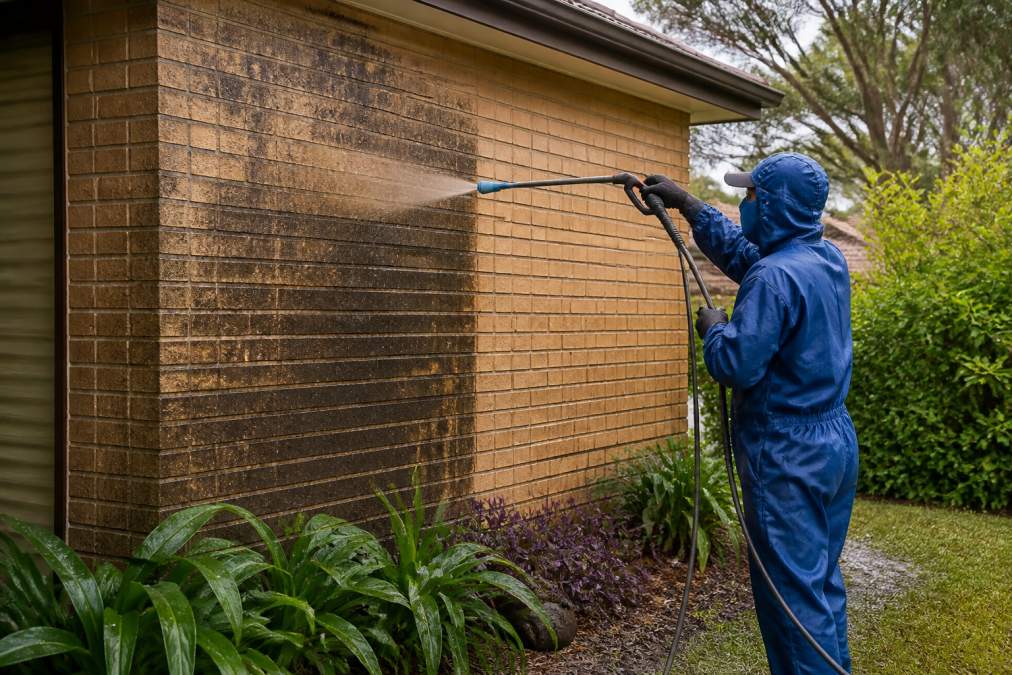
That distinction matters in a humid, coastal climate where mould and algae return quickly after a rain-heavy season. Soft washing targets the organism, not just the stain.
Soft washing removes organic growth at its source using low pressure and cleaning solutions. High pressure often only blasts the surface layer, which can lead to black spots returning within months.
Soft Wash vs Pressure Wash: Key Differences
The core difference is pressure. Soft washing uses low pressure with cleaning solutions for delicate surfaces, while pressure washing uses high-pressure water blasting for hard, durable surfaces like concrete.
| Factor | Soft Wash | Pressure Wash |
|---|---|---|
| Pressure | Low, hose-like | High |
| Method | Chemical + dwell time | Mechanical force |
| Best surfaces | Roofs, render, timber, cladding | Concrete, pavers, driveways |
| Risk | Low | Stripping, etching, water ingress |
| Regrowth control | Kills growth at root | Removes surface layer only |
When High Pressure Still Makes Sense
High pressure earns its place on bare concrete driveways, paths, and paved areas where there is no paint, coating, or sealant to protect. On those surfaces, mechanical force lifts embedded dirt that chemistry alone will not shift. The mistake is treating pressure as a universal tool. Applied to a timber deck or a tiled roof, it drives water behind the surface and strips finishes, which is exactly the damage soft washing avoids.
Surfaces Safe for Soft Washing (And What to Avoid)
Most exterior surfaces around a home handle soft washing well, but the correct mix, dwell time, and rinse method change with the material. Treating every surface the same is how homeowners end up with stripped coatings, bleached timber, or dead garden beds. The guide below covers the materials most common on homes in humid, coastal areas, including the heritage and rendered finishes that dominate older suburbs.
Tiled and metal roofs
Concrete and terracotta tiles, Colorbond, and zincalume roofs are the most common soft wash surfaces. The mix is applied at low pressure, left to dwell for 10 to 30 minutes, then rinsed from the ridge down so runoff does not streak lower courses. Terracotta is more porous than concrete and can hold moisture longer, so a slightly weaker mix and a second light application is often safer than one strong pass. Metal roofs with failing coatings should be assessed first, because chemical cleaning will not restore a surface that is already corroding.
Render, brick, and heritage masonry
Rendered walls and brick are generally safe, but the age and condition of the mortar matters. Older lime-mortar brickwork is softer than modern cement mortar and can be eroded by aggressive mixes or high pressure (historicengland.org.uk). Sandstone, which is common on heritage homes and boundary walls, is highly porous and sensitive to both pressure and strong chemicals; it should be cleaned with a low-strength mix, a short dwell, and a gentle rinse, never a pressure washer. A neutraliser is applied afterwards to stop residue reacting with the stone.
Timber decks, fences, and weatherboard
Timber is the surface most likely to be damaged by a careless clean. Soft washing is suitable, but the solution must be timber-safe and the surface must not be saturated, because excess water drives into end grain and causes swelling, warping, and coating failure. Weathered timber with failing stain or paint should be assessed before cleaning, since any method will lift loose coating. After cleaning, the timber needs to dry fully before any re-oiling or re-staining.
Vinyl, painted cladding, and fibre cement
Vinyl and painted cladding are soft wash only. High pressure forces water behind the panels, which can lead to moisture trapped in the wall cavity and, over time, internal damp and mould (the NHS). Fibre cement sheeting is durable but its painted surface can be etched by overly strong mixes, so a diluted solution and a controlled dwell are used.
Concrete driveways, paths, and pavers
Concrete and pavers tolerate both methods. Soft washing removes organic staining such as algae, mould, and lichen, while high pressure lifts embedded grime and ground-in dirt. On sealed or coloured concrete, high pressure can strip the sealer or fade the colour, so soft washing is the safer default and pressure is reserved for bare, unsealed surfaces.
Surfaces to avoid or treat with caution
- Sandstone and other porous heritage stone: low-strength mix, no pressure, neutralise afterwards.
- Weathered or flaking timber: assess first; cleaning will not fix failing coatings.
- Damaged render and cracked pointing: repair before cleaning, not after.
- Aged or oxidised metal roofs: chemical cleaning may accelerate coating failure.
- Any surface with loose, flaking paint: expect some paint loss regardless of method.
The right question is not “can this surface be soft washed?” but “what mix, dwell time, and rinse does this specific material need?” Sandstone, weathered timber, and aged metal all need a different approach from a standard tiled roof.
House Washing Cost Sydney: What Affects Your Quote
House washing cost in Sydney is not a flat rate. It is built from the size of the property, the number and type of surfaces, access, and how much organic growth has built up. Two homes on the same street can attract very different quotes because a single-storey brick veneer with a simple roof and driveway is a fundamentally different job from a multi-level rendered home with steep access, delicate cladding, and years of mould.
The main cost drivers
- Total area and number of surfaces. A roof-only clean sits at the lower end; a full exterior including roof, walls, gutters, paths, and fencing sits higher. Each additional surface adds time, solution, and setup.
- Surface type. Tiled roofs, render, and concrete are straightforward. Sandstone, weathered timber, and aged metal require gentler mixes, more careful application, and sometimes a neutraliser, all of which add labour.
- Access and height. Single-storey homes with clear access are quick. Two-storey homes, steep blocks, tight side access, and roofs with a steep pitch require more equipment, more setup, and more time at height.
- Level of growth and staining. Light surface algae is a single-pass job. Heavy black mould, lichen, and long-standing staining may need a stronger mix, a longer dwell, or a second application.
- Add-ons. Gutters, paths, driveways, fencing, and decks are often quoted separately because they add area and time.
How quotes are typically structured
Most providers quote per job rather than per square metre, because access and surface condition vary too much for a simple rate to be accurate. A common pattern is a base price for the main structure plus an additional amount for each extra surface. Some providers offer a discounted rate for combining a roof clean with a house wash, since the setup is shared.
What to check before you accept a quote
- Does the quote include gutters, paths, and fencing, or are they extras?
- Is plant protection and neutralising included, or charged separately?
- Is the provider licensed and insured, and will they confirm it in writing?
- Are before-and-after photos available from a similar property?
Why we do not publish a flat rate
A published figure that does not match your property is worse than no figure at all. The honest approach is a free on-site or photo-based assessment that confirms the surfaces, access, and growth level, then a fixed quote based on what is actually there. Our pricing page sets out current starting rates for common jobs, and the assessment confirms the final figure before any work begins.
Get at least two quotes and compare what is included, not just the total. A cheaper quote that excludes gutters, plant protection, or neutralising often ends up costing more once those are added.
Protecting Garden Plants During Soft Washing
Garden plants are the most common casualty of exterior cleaning, and the fix is straightforward. Before any solution is applied, nearby plants are watered and covered, and any runoff is managed so it does not pool around roots.
The cleaning mix is diluted to the correct strength, and a neutraliser is applied to surrounding soil and surfaces after the job. This is why biodegradable cleaning solutions are used and finished with neutralisers, which break down residue so it does not damage garden beds, lawns, or neighbouring plants. A pre-job walkthrough identifies which plants sit in the runoff path, and those get the most protection.
Skipping the neutraliser is the most common DIY mistake. Cleaning solution left in soil can burn foliage and stall growth for weeks, even when the mix itself is biodegradable.
Professional House Washing Frequency and Seasonal Timing
Most homes need a professional wash every 12 to 18 months, with shaded or coastal-facing surfaces cleaned closer to the yearly mark. In a humid climate with heavy summer rain, organic growth returns faster on south-facing walls and roofs that stay damp longer.
Timing matters as much as frequency. Late spring is a practical window, clearing winter growth before summer, and an autumn clean removes the build-up from the wet season. Homes preparing for sale often schedule a wash in the weeks before listing to lift curb appeal.
Preventative maintenance beats reactive cleaning. A surface washed before growth takes hold is quicker to clean, cheaper to maintain, and stays presentable for longer than one left until the mould is visible from the street.
DIY vs Professional Soft Washing: A Risk Assessment
DIY soft washing looks simple and rarely is. The equipment is available for hire, but the risk sits in the details: correct dilution ratios, safe handling of biocides, protecting plants, and knowing which surfaces cannot take pressure at all.
The real risks of a DIY approach:
- Surface damage from using a pressure washer where soft washing is required
- Chemical misuse, including burns to plants and harm to waterways
- Incomplete treatment that leaves growth to return within months
- Safety exposure when working at height on roofs and gutters
A professional service carries trade licensing and insurance, so liability sits with the contractor rather than the homeowner. For a single-storey concrete driveway, DIY is reasonable. For a two-storey roof, delicate cladding, or a mixed-surface property, the risk of damage outweighs the saving.
Ask any provider for their licence and insurance details before booking, and request before-and-after photos from a similar property. A trade-licensed team will supply both without hesitation.
Frequently Asked Questions
What is the average cost to soft wash a house?
Soft washing costs vary based on property size, surface type, accessibility, and how much organic growth needs removing. A single-storey home with a straightforward layout sits at the lower end, while multi-storey properties with steep roofs or extensive mould sit higher. Request a free on-site assessment for an exact figure based on your property.
Is soft washing safe for all exterior home surfaces?
Soft washing suits most residential surfaces, including Colorbond roofs, terracotta tiles, render, weatherboard, vinyl cladding, timber decks, and concrete driveways. The low-pressure application and biodegradable solutions prevent the surface damage that high-pressure water blasting causes. Some surfaces need adjusted chemical mixes or dwell times, so a professional on-site assessment confirms the right approach before work starts.
How often should I have my home professionally soft washed?
Most homes benefit from professional soft washing every 12 to 18 months. Properties near coastal areas, bushland, or with heavy tree cover may need cleaning every 6 to 12 months because mould, algae, and lichen return faster in humid conditions. Scheduling before winter reduces organic growth during the wetter months, and regular maintenance protects exterior surfaces and keeps the property looking well kept.
What chemicals are used in professional soft washing?
Professional soft washing uses biodegradable cleaning solutions, including surfactants that break down grime and biocides that kill mould, algae, and mildew at the root. Sodium hypochlorite is common at diluted concentrations, applied with neutralisers to protect gardens and surrounding surfaces. The mix ratio changes depending on the surface and the level of organic growth, which is why trained operators assess each property before choosing a solution.
Cleaning a home’s exterior without damaging the surfaces you are trying to protect is the real challenge, and it is the one most homeowners underestimate. Sydney Pressure Washing Service handles mixed-surface properties in a single visit, using trade-licensed crews, biodegradable solutions, and neutralisers to protect both your surfaces and your garden. Get started with Sydney Pressure Washing Service and request a free quote to restore your property’s appearance safely.
