
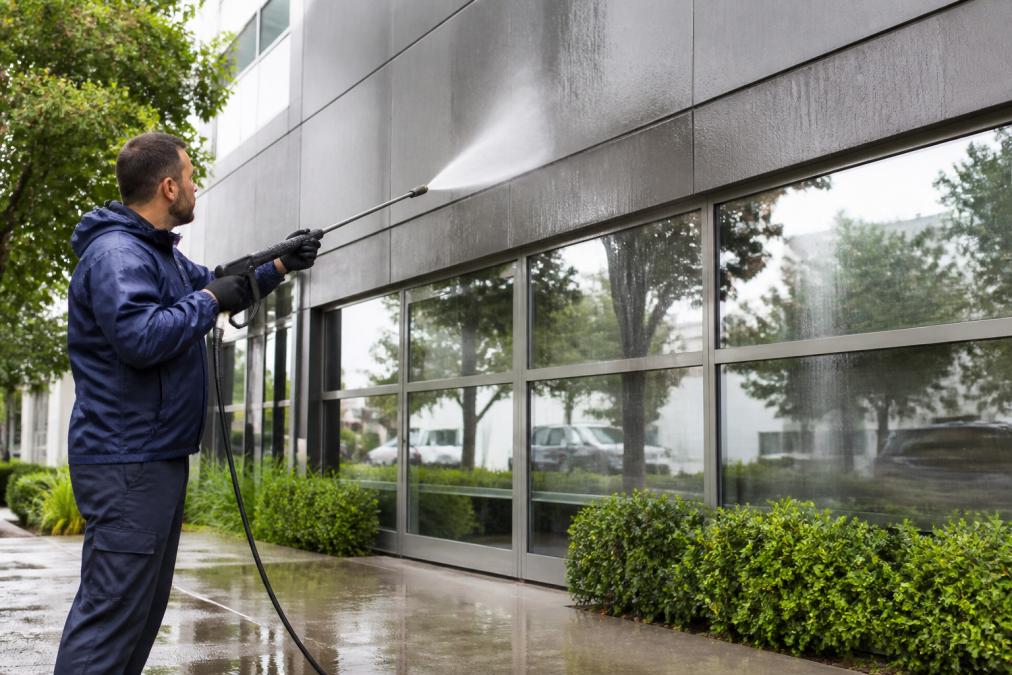
Table of Contents
- What a Commercial Exterior Cleaning Quote Should Cover
- How to Prepare for Strata Cleaning Inspections
- Commercial Pressure Washing Prices: What Drives the Number
- Pressure Cleaning vs Soft Washing: Which Surfaces Need Which
- Your Commercial Exterior Cleaning Checklist
- Compliance, Insurance and Eco-Friendly Chemical Safety
- Getting a Free Quote: What to Send and What to Expect
- Frequently Asked Questions
Last Updated: September 19, 2026
What a Commercial Exterior Cleaning Quote Should Cover
A commercial exterior cleaning quote should itemise every surface, method, and access requirement before any work begins. Vague lump-sum pricing is where disputes start. Most facility managers tell us the same thing: they want to compare quotes properly, but each one is structured differently.
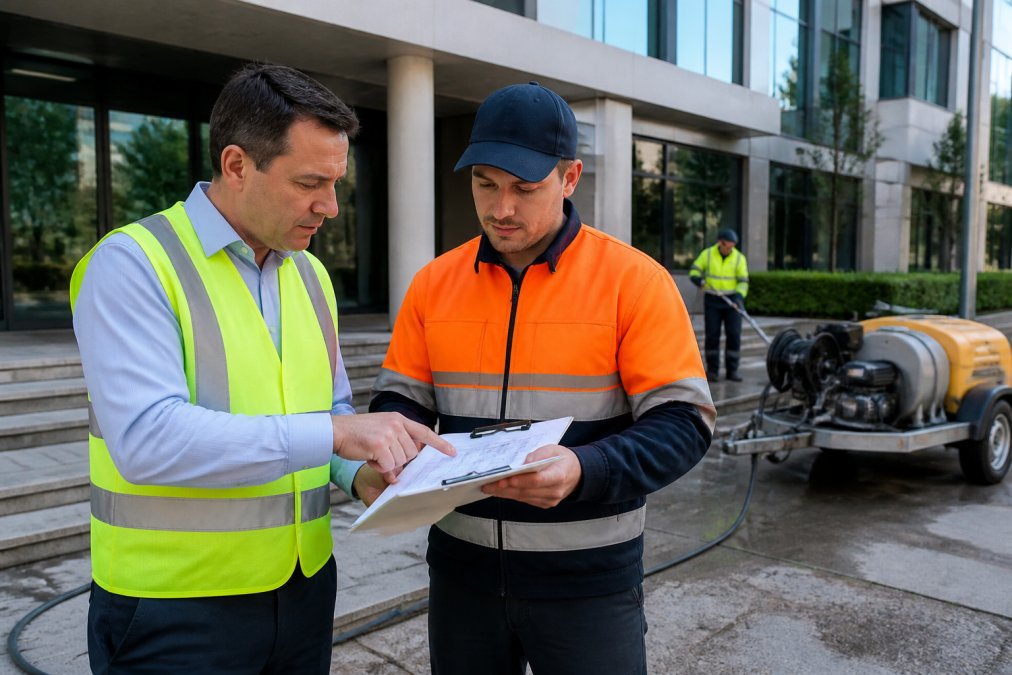
Safe Work Australia’s guidance on construction and property maintenance safety
A quote that lists surfaces separately lets you verify nothing gets skipped. It also protects you when a contractor claims a wall “wasn’t included.”
Line Items to Expect in a Tailored Quote
A tailored quote from a trade-licensed provider typically breaks down as follows:
- Surface-by-surface scope: concrete, render, cladding, glass, timber, metal
- Method per surface: pressure cleaning or soft washing
- Chemical specification: biodegradable detergents and neutralisers where required
- Access equipment: elevated work platforms, harnesses, or scaffolding
- Site protection: plant covering, drainage containment
- Time and frequency: one-off or scheduled maintenance
- Compliance documents: insurance certificates and safe work method statements
If a quote bundles all of this into one number with no breakdown, ask for the itemised version. Reputable operators provide it without hesitation.
How to Prepare for Strata Cleaning Inspections
Preparing for strata cleaning inspections means gathering access documents, notifying residents, and confirming insurance requirements before the contractor arrives. Strata committees that prepare properly avoid the delays that push jobs into the following quarter.
Documents and Access Arrangements to Sort First
Before inspection day, confirm:
- Current public liability insurance certificate from the contractor
- Safe work method statements for each task
- Written access approval for common property and any lot-adjacent surfaces
- Parking and loading arrangements for equipment vehicles
- Water source location and drainage points
- Resident notification with date and time window
Strata maintenance works best when the committee appoints one point of contact. Multiple approval chains slow everything down, and contractors bill for waiting time.
Photograph the building facade before any cleaning starts. This baseline record protects both the strata committee and the contractor if a pre-existing crack or stain is later disputed.
Commercial Pressure Washing Prices: What Drives the Number
Commercial pressure washing prices depend on square metreage, surface type, access difficulty, contamination level, and how often the work is scheduled. No honest provider quotes a flat rate before seeing the site, but a transparent provider will show you how the number is built.
How Square Metre Pricing Actually Works
Square metre pricing is the fairest baseline for large flat areas like car parks, loading docks, and warehouse hardstands. A common industry pattern is to quote a base rate per square metre for open, ground-level concrete, then apply multipliers for height, restricted access, or heavy contamination.
The Pricing Factors That Move the Number
| Pricing Factor | What Increases Cost | What Reduces Cost |
|---|---|---|
| Area | Large facades, multi-level car parks | Small, contained areas |
| Surface type | Textured render, porous concrete | Smooth sealed concrete |
| Access | Height work, restricted entry, after-hours | Ground-level, open access, standard hours |
| Frequency | One-off reactive cleans | Scheduled maintenance program |
| Contamination | Heavy mould, graffiti, oil stains | Light surface grime |
| Water and drainage | No on-site water, contained runoff required | On-site water, compliant drainage |
Frequency changes the maths more than any other factor. A scheduled preventative maintenance program costs less per visit than reactive one-off cleans, because grime never reaches the point where it needs aggressive treatment. A quarterly facade clean is cheaper per visit than an annual clean that has to strip years of built-up mould and algae.
What a Transparent Quote Looks Like
- Measured area in square metres, surface by surface
- Rate per square metre or an hourly rate with estimated hours
- Access equipment listed as a separate line if required
- Chemical and neutraliser costs where specialist treatment is needed
- Frequency discount shown if you commit to a scheduled program
Ask for the quote to state the assumed square metreage. If the contractor has underestimated the area to win the job, the variation later will cost more than the original quote saved.
Pricing depends on your specific site. Request a tailored quote for an accurate figure rather than relying on generic estimates.
Pressure Cleaning vs Soft Washing: Which Surfaces Need Which
Pressure cleaning and soft washing are not interchangeable. Choosing the wrong method damages the surface you are trying to protect.
Never let a contractor pressure clean a painted or timber surface without confirming the method first. High-pressure water blasting on timber or aged render causes permanent surface damage that costs far more to repair than the cleaning saved.
Your Commercial Exterior Cleaning Checklist
A commercial exterior cleaning checklist keeps scheduled work on track and makes handovers between contractors clean. Use this as a starting template and adapt it to your property.
- Building facade and external walls
- Concrete driveways and pathways
- Car park surfaces and line markings
- Retail storefront glazing and frames
- Window cleaning on all accessible levels
- Graffiti removal from high-traffic surfaces
- Concrete sealing after deep cleaning
- Mould and algae removal from shaded areas
- Gutter and drainage clearing
Industry-Specific Maintenance Schedules
Different property types need different frequencies. Retail storefronts with heavy foot traffic usually need monthly window cleaning and quarterly facade work. Office complexes typically run quarterly exterior cleans. Industrial sites with oil and chemical exposure often need monthly pressure cleaning on hardstand areas. Strata buildings generally schedule twice-yearly full exterior cleans with spot treatments in between.
Compliance, Insurance and Eco-Friendly Chemical Safety
Compliance and insurance separate professional operators from casual ones. Before any commercial property work begins, ask for three documents: a certificate of currency for public liability, a safe work method statement, and evidence of trade licensing. Each one does a different job, and a facility manager who understands them can reject a non-compliant contractor before work starts.
The Three Documents and What They Must Contain
Certificate of currency for public liability. This is proof the contractor’s insurer will cover claims arising from the work. Check the expiry date, the insured entity name, and the cover amount. A certificate that names a different company than the one quoting is a red flag.
Environmental Compliance and Runoff
Environmental compliance matters because cleaning runoff enters stormwater systems. Biodegradable detergents and neutralisers prevent chemical damage to garden beds and waterways, but the bigger issue is containment. On sites with oil, grease, or heavy chemical contamination, runoff may need to be captured and disposed of as trade waste rather than allowed to drain.
The EPA’s guidance on trade waste and stormwater management
Why This Protects the Facility Manager
If an uninsured contractor damages property or injures a worker on your site, the liability can flow back to the property owner or manager. Compliance documentation is not paperwork for its own sake; it is the mechanism that transfers risk to the party best placed to control it.
A contractor who cannot produce insurance and safe work method statements on request is not a contractor you want on a multi-level building. Ask before you book, not on the day.
Eco-Friendly Chemical Safety in Practice
Modern commercial cleaning uses biodegradable detergents, neutralisers, and low-toxicity treatments wherever the surface allows. The trade-off is that some heavy contamination still requires stronger agents, which is why neutralisers and containment matter. A responsible provider will tell you which surfaces need which approach and how they will protect surrounding gardens, waterways, and pedestrian areas.
Getting a Free Quote: What to Send and What to Expect
Getting an accurate quote takes about ten minutes of preparation. Send photos of each surface, the approximate square metreage, your property address, and any access restrictions. Mention the surfaces you are unsure about so the contractor can assess them properly.
Frequently Asked Questions
What are the typical commercial cleaning rates in Sydney?
Commercial exterior cleaning rates vary based on property size, surface type, access requirements and frequency. Most providers quote using square metre pricing, an hourly rate, or a fixed job price after a site assessment. Costs rise for multi-storey facades, heavy mould and algae removal, or work requiring elevated platform access. Request a tailored quote from a trade-licensed provider so the price reflects your actual building rather than a generic estimate.
How do professional cleaners calculate quotes for commercial properties?
Providers assess total square metreage, surface materials, contamination level and site access before quoting. A concrete driveway needs different treatment to a rendered building facade or timber decking, so the method (pressure cleaning or soft washing) changes the labour and chemical cost. Frequency also matters: preventative maintenance contracts usually cost less per visit than one-off deep cleans. Ask for a written breakdown so you can see what each line item covers.
How often should commercial buildings undergo exterior pressure washing?
Most commercial properties need exterior cleaning every three to six months, depending on location, tree cover and foot traffic. Retail storefronts and office complexes near main roads collect grime faster and often benefit from quarterly servicing. Industrial sites with heavy dust or exhaust exposure may need monthly attention. A provider can recommend a service frequency after a site assessment, and scheduled visits usually work out cheaper than reactive cleaning.
What certifications should a commercial exterior cleaning company hold?
Look for trade licensing, current public liability insurance and workers compensation coverage. The provider should be able to supply safe work method statements and demonstrate environmental compliance, including the use of biodegradable detergents and appropriate runoff controls. For strata and commercial work, ask whether they have experience with building facade access and whether they can provide documentation for your records before work begins.
Comparing quotes on price alone is the fastest way to end up with surface damage and a second bill. Get a quote that shows the method, the chemicals, and the compliance documents behind it. Sydney Pressure Washing Service offers itemised quotes, trade-licensed crews, biodegradable cleaning solutions, and safe handling of everything from concrete driveways to delicate roof surfaces. Get started with Sydney Pressure Washing Service and request your free quote today.
