
Table of Contents
- How to Tell If It’s Condensation or Structural Damp
- What You’ll Need Before You Start
- Step 1: Reduce Moisture and Improve Ventilation
- Step 2: Choose the Best Mould Killer for Exterior Walls
- Step 3: Soft Washing vs Pressure Washing for Mould
- Step 4: Fix Thermal Bridging and Insulation Gaps
- Step 5: Apply Anti-Mould Paint and Coatings
- Step 6: Manage Landscaping and Furniture Placement for Airflow
- Step 7: Set a Long-Term Maintenance Schedule
- Frequently Asked Questions
Last Updated: September 15, 2026
How to Tell If It’s Condensation or Structural Damp
Preventing mould on exterior walls starts with one question: is the moisture coming from inside or outside? Get that wrong and every product treats a symptom, not the cause.
Condensation mould appears where warm, moist indoor air meets a cold surface. Structural damp comes through the wall itself, via failed waterproofing, cracked render, or a bridged damp-proof course.
The telltale signs of each
The two problems leave different fingerprints. Learn to read them before you spend a dollar on treatment.
- Condensation: fuzzy black or green growth, often in patches near corners, ceilings, and window frames. Worse in winter and after showers or cooking. The wall feels cold but not wet.
- Structural damp: dark staining, bubbling paint, a musty smell that never clears, and a visible tide mark low on the wall. The plaster may feel damp to touch even in dry weather.
A common mistake is treating a structural problem with a dehumidifier and wondering why the mould returns. A hygrometer settles it: if indoor relative humidity sits above 60% for long stretches, condensation is the driver (Mould). If the wall reads damp while indoor humidity stays low, water is getting in from outside.
What You’ll Need Before You Start
Gather these before you touch the wall. Stopping mid-job to hunt for gear is how people miss patches and re-treat within a season.
- A hygrometer to measure indoor relative humidity
- Stiff-bristled brush and a soft wash brush for delicate surfaces
- A suitable fungicide or bleach-based wash
- Personal protection: gloves, eye protection, and a respirator
- A garden sprayer for even application on vertical surfaces
- Drop sheets and plant covers to protect landscaping
- A moisture meter for checking wall readings before and after
Total time: most exterior wall jobs take two to four hours depending on height and surface area. Difficulty: moderate, but roof and second-storey work is a job for licensed operators.
Never mix bleach with ammonia-based cleaners (Chemical burns, first aid and treatment). The resulting gas is toxic. Always check the label and ventilate the area while working.
Step 1: Reduce Moisture and Improve Ventilation
Moisture control is the single highest-use step, because mould cannot establish itself on a dry surface. But “improve ventilation” is useless unless you know your target number.
Set a measurable target, not a vague goal
Mould spores germinate when the relative humidity at a surface stays above roughly 70% for extended periods (the WHO). Keep living-area relative humidity between 40% and 60%, and keep the surface temperature of external walls above the dew point. A cheap hygrometer placed 30-50 cm from the suspect wall tells you whether you have a humidity problem or a cold-surface problem, they need different fixes.
Match the fix to the moisture pathway
There are three pathways, each with a different remedy. Treating the wrong one is why mould returns.
- Lifestyle moisture (cooking, showers, drying clothes indoors): a single hot shower can add several litres of water vapour to the air. Run the extractor fan during and for at least 15 minutes after use, and check that it actually extracts, hold a tissue against the grille; if it does not hold, the fan is underperforming. Ducted rangehoods vented outside beat recirculating filters every time.
- Airborne condensation on cold surfaces: improve cross-ventilation by opening windows on opposite sides of the home for 10-15 minutes a day, even in winter. Trickle vents on window frames and a heat recovery ventilation system are the two upgrades that make the biggest difference in tightly sealed modern homes.
- Moisture ingress through the envelope: cracked render, failed sealant around window and door frames, blocked weep holes in brickwork, and overflowing gutters that soak the wall below. These are structural fixes, not cleaning tasks, and no wash will hold if water keeps entering.
Where a dehumidifier actually helps, and where it does not
A dehumidifier suits airborne moisture in a closed room, laundries, wardrobes against external walls, downstairs rooms with limited airflow. Size it to the room: most domestic units are rated in litres per day, and a small bedroom needs far less capacity than an open-plan living area. Empty and clean the tank regularly, a neglected dehumidifier becomes its own mould reservoir.
A dehumidifier will not fix rising damp, penetrating damp, or a bridged damp-proof course. If the wall reads damp on a moisture meter while indoor humidity sits in the 40-55% band, the water is coming through the fabric and no amount of drying the air will stop it.
The re-test that tells you whether you have won
After two to three weeks of consistent ventilation and humidity control, re-check with the hygrometer and moisture meter. If surface readings have dropped and stayed down, you have addressed the driver. If mould keeps returning in the same place, the moisture source is still active, call in a building inspector or damp specialist rather than repeat the wash.
Buy a hygrometer and a moisture meter before you buy any cleaning product. The two readings together tell you whether you are fighting condensation or structural damp, and that decision determines everything that follows.
Step 2: Choose the Best Mould Killer for Exterior Walls
The best mould killer for exterior walls depends on the surface, not the brand. Bleach works on sealed concrete and render but damages timber and strips coatings.
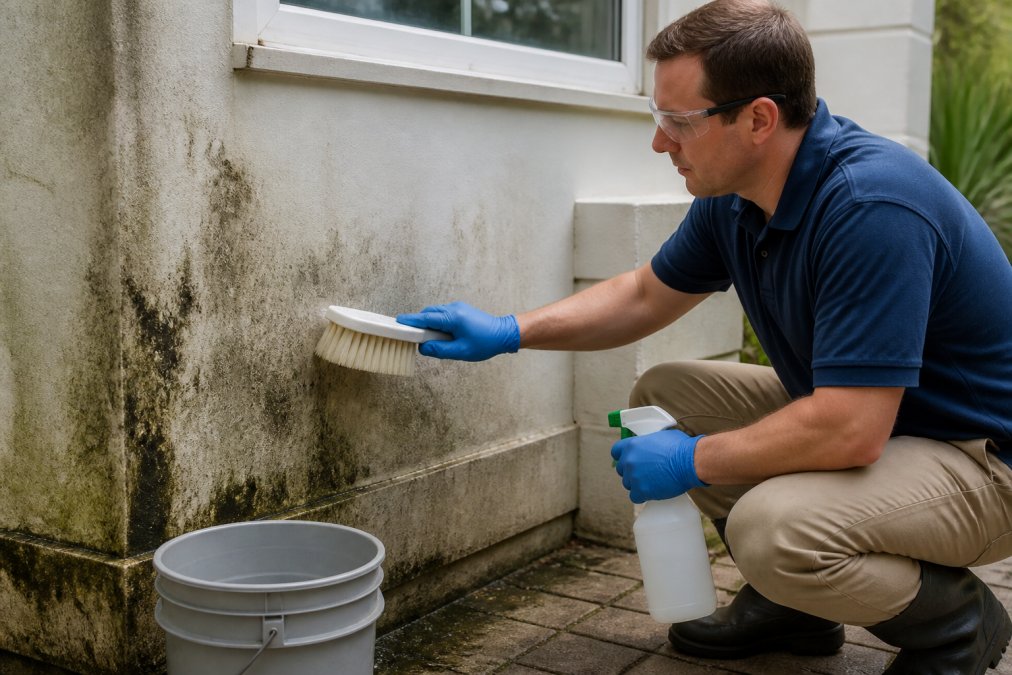
For most exterior jobs, a purpose-made fungicide or diluted bleach (roughly one part bleach to three parts water) handles surface spore growth. Apply with a garden sprayer, let it dwell ten to fifteen minutes, scrub with a stiff brush, then rinse thoroughly and protect plants downwind.
For porous or delicate surfaces, a soft wash approach using low pressure and a biodegradable cleaning solution is safer. This is where most DIY attempts go wrong: harsh chemicals on a porous surface can discolour it permanently.
Apply your wash on a cool, overcast day. Direct sun dries the solution before it can work, and heat makes bleach far more aggressive on paint.
Step 3: Soft Washing vs Pressure Washing for Mould
Soft washing is the better choice for most exterior wall mould: high pressure drives water into porous surfaces and can strip coatings, crack render, and void warranties. Pressure washing suits hard, sealed surfaces only.
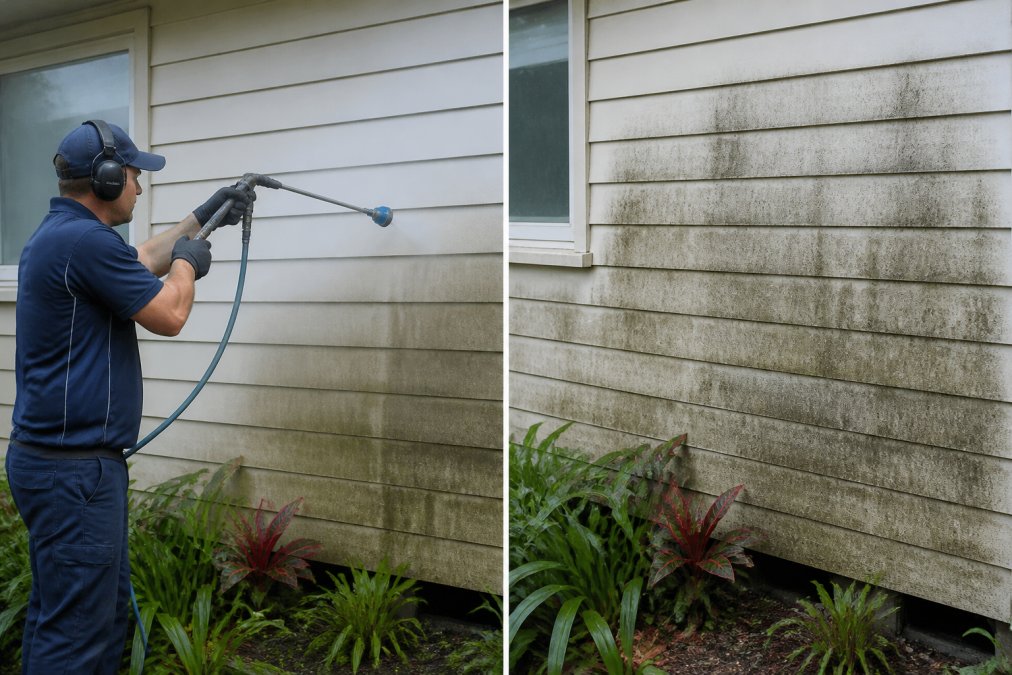
Here is how the two methods compare:
| Surface | Best Method | Why |
|---|---|---|
| Concrete driveway | Pressure washing | Hard, sealed, tolerates high pressure |
| Timber weatherboard | Soft washing | Pressure splinters and strips the grain |
| Rendered walls | Soft washing | Pressure cracks render and drives in water |
| Roof tiles | Soft washing | Pressure dislodges tiles and voids warranties |
| Brickwork | Soft washing | Porous; pressure forces water inward |
Step 4: Fix Thermal Bridging and Insulation Gaps
Step 5: Apply Anti-Mould Paint and Coatings
How the two main coating types actually work
The preparation that determines whether the coating lasts
Where each coating belongs on an exterior wall
| Surface | Suitable coating | Why |
|---|---|---|
| Rendered masonry (dry, sound) | Fungicide-infused masonry paint | Biocide resists regrowth; breathable enough for most render |
| Older brick without a DPC | Breathable microporous coating | Lets residual moisture escape; avoids blistering |
| Timber weatherboard | Exterior-grade paint with fungicide additive | Flexible film moves with the timber; rigid coatings crack |
| Previously sealed or waterproofed walls | Match the existing system | Mixing incompatible coatings causes adhesion failure |
What anti-mould paint will not do
Recoat exterior anti-mould coatings on the manufacturer’s recommended cycle, commonly every 5-7 years for biocidal products in full sun. Mark the date on the tin or in your maintenance schedule so you are not guessing.
Step 6: Manage Landscaping and Furniture Placement for Airflow
Step 7: Set a Long-Term Maintenance Schedule
| Frequency | Task | What to check |
|---|---|---|
| Monthly | Inspect walls and gutters | Early spotting, clear debris |
| Quarterly | Check humidity and airflow | Hygrometer readings, ventilation |
| Every 6-12 months | Professional exterior clean | Full surface treatment |
| Annually | Inspect seals and coatings | Render cracks, failed sealant |
| Every 2-3 years | Review insulation and drainage | Thermal bridging, ground slope |
Frequently Asked Questions
What kills mould permanently outside?
No single treatment kills mould permanently because spores return whenever moisture and organic matter are present. A combination of physical removal, a fungicide or bleach solution, and ongoing moisture control is what keeps it away. Fixing the underlying cause, whether that is a leaking gutter, rising damp, or poor ventilation, matters more than the product itself. If you only clean the surface without addressing moisture, regrowth within months is common.
Does high pressure washing help prevent mould regrowth?
Pressure washing removes visible mould and grime quickly, but it can drive water into porous surfaces and spread spores if the pressure is too high. Soft washing, which uses low pressure and a biodegradable cleaning solution, is gentler on render, timber, and painted surfaces. For long-term prevention, the method matters less than what you do after: applying an anti-mould coating and keeping the wall dry.
How often should exterior walls be cleaned to prevent mould?
In humid or coastal areas, a clean every 12 months is a reasonable baseline. Properties surrounded by trees, with poor drainage, or facing persistent shade may need attention every 6 to 9 months. The exterior wall maintenance schedule should also include gutter clearing, checking for rising damp or penetrating damp, and inspecting seals around windows. Catching early spore growth saves money compared with full remediation later.
Can landscaping choices impact mould growth on house walls?
Yes. Dense shrubs, climbing plants, and mulch beds pressed against the wall trap moisture and reduce airflow, which raises relative humidity at the surface and encourages fungal growth. Keeping a 30 cm gap between plants and the wall, avoiding irrigation sprays that hit the facade, and trimming trees that cast constant shade all reduce the risk. Air circulation is one of the simplest defences against exterior mould.
