
Table of Contents
- Why Commercial Building Exterior Pressure Cleaning Is a Maintenance Task, Not an Aesthetic One
- Soft Washing vs Pressure Washing Commercial Buildings: Choosing the Safer Method
- What Affects Commercial Exterior Cleaning Cost per Square Metre
- Australian Environmental Regulations for Pressure Cleaning Wastewater
- How to Prepare for Strata Cleaning Inspections
- A Practical Pressure Cleaning Schedule for Commercial Properties
- Final Checklist Before Hiring a Commercial Cleaning Contractor
- Frequently Asked Questions
Last Updated: September 6, 2026
Why Commercial Building Exterior Pressure Cleaning Is a Maintenance Task, Not an Aesthetic One
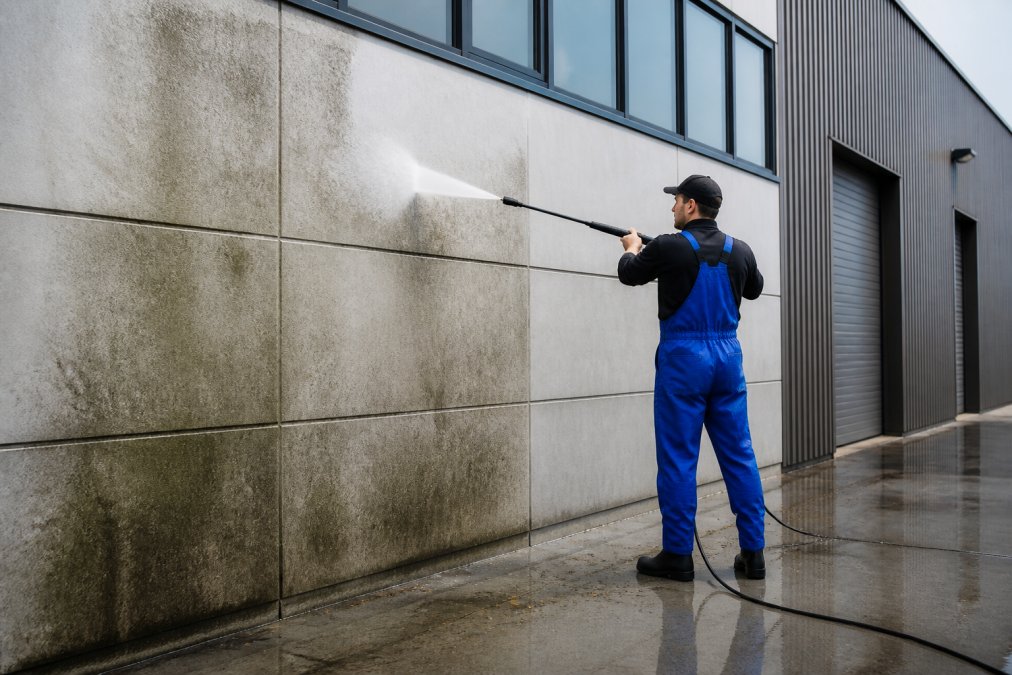
Most property managers treat building washdown as a cosmetic expense to defer. That framing costs them far more in the long run. Commercial building exterior pressure cleaning is a protective maintenance strategy that preserves the integrity of your facade, prevents costly structural repairs, and helps you meet your obligations as a building owner.
Grime, mould, and algae left to accumulate on commercial assets can cause significant issues. Organic growth does not sit on the surface; it works into porous materials like concrete and brick, breaking down the substrate over time.
Commercial building exterior pressure cleaning is the systematic removal of contaminants, organic growth, and pollutants from a structure’s outer surfaces using specialised equipment and techniques. When scheduled regularly, it functions as preventative maintenance, not vanity work.
Soft Washing vs Pressure Washing Commercial Buildings: Choosing the Safer Method
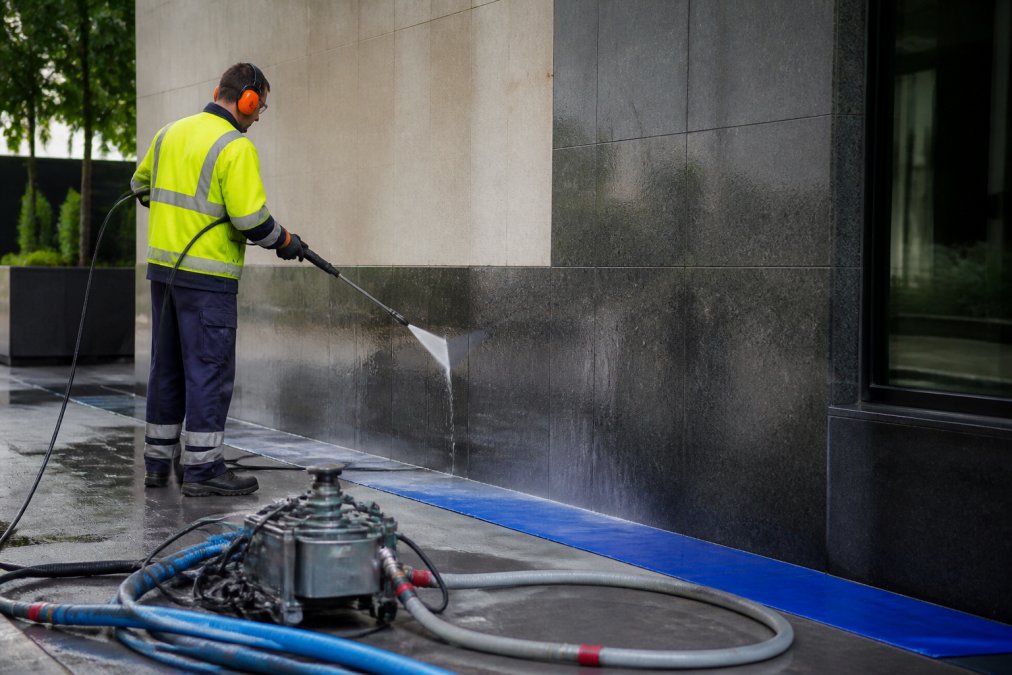
The choice between soft washing vs pressure washing commercial buildings comes down to one factor: surface integrity. High-pressure water jetting suits hardy materials like concrete and brick. Soft washing, which pairs low-pressure cleaning with biodegradable detergents, protects delicate surfaces including painted render, timber, and vinyl cladding.
Many facility managers assume more pressure equals a cleaner building. The opposite is true on softer substrates. Excessive pressure forces water into gaps, etches sealants, and strips protective coatings, accelerating the very deterioration you are trying to prevent.
A common approach is to combine methods on a single site. Concrete car parks and pathways handle pressure washing, while the building facade and any sensitive edging receive a soft wash. This hybrid strategy protects your asset while still delivering a thorough clean.
Before any cleaning begins, a site safety assessment identifies which surfaces need low-pressure treatment. Water pressure that is safe for a concrete driveway can permanently damage timber cladding or dislodge roof tiles. Let the surface dictate the method, not the other way around.
What Affects Commercial Exterior Cleaning Cost per Square Metre
Commercial exterior cleaning cost per square metre is rarely quoted as a single flat rate because every site presents different variables. However, facility managers need a realistic benchmark to budget against, not just a list of vague factors. Commercial exterior cleaning cost per square metre is rarely quoted as a single flat rate because every site presents different variables. Facility managers need a realistic benchmark to budget against, not just a list of vague factors.
Here is how the major cost drivers move the number up or down:
Access and height. Single-storey retail frontages are the cheapest to clean because a technician can work from the ground with a wand and a water reclamation unit. Once you introduce a second storey, the contractor must bring in an elevated work platform (EWP) or cherry picker. That adds a mobilisation fee plus extra setup time. A three-storey office block with a full facade washdown will land at the higher end of the per-square-metre range, not because the surface is harder to clean, but because the access equipment dominates the job cost.
Contamination level. A facade cleaned annually with soft washing stays ahead of organic growth, so the job is mostly preventative. A neglected building with years of mould, algae, and atmospheric grime requires pre-treatment with biodegradable detergents, longer dwell times, multiple passes, and sometimes a second visit after the first rinse reveals stubborn staining.
Surface type and method. Concrete car parks and pathways handle high-pressure washing, which is faster and therefore cheaper per square metre. Delicate surfaces, painted render, timber cladding, vinyl, or heritage brick, require soft washing at lower pressure with chemical application. Soft washing takes longer because the detergent needs dwell time to break down biological growth before rinsing.
Wastewater containment. Environmental compliance is not optional, and it is not free. Water reclamation equipment, vacuum boots, containment mats, and collection tanks, adds labour and equipment wear. A contractor who skips containment can underbid a compliant one by a noticeable margin, but that saving disappears the moment the local council or state environment protection authority issues a fine for allowing contaminated runoff into the stormwater system. That fine can be significant and escalates for repeat offences.
Site-specific extras. Gutter cleaning, roof treatment, graffiti removal, and high-level window cleaning are usually quoted separately from the per-square-metre facade rate. If your scope includes those, ask for them as line items rather than bundled into a vague total.
A practical way to compare quotes is to ask each contractor for a per-square-metre rate on the facade, a separate rate for the car park or hardstand areas, and a fixed price for access equipment. That structure lets you see where one provider is padding the price and where another is cutting corners on compliance. A practical way to compare quotes is to ask each contractor for a per-square-metre rate on the facade, a separate rate for the car park or hardstand areas, and a fixed price for access equipment. That structure lets you see where one provider is padding the price and where another is cutting corners on compliance.
When requesting quotes, provide the contractor with your building’s approximate square metreage, the number of storeys, and photos of the worst-affected areas. That reduces the need for a site visit before pricing and often results in a more accurate initial estimate.
Australian Environmental Regulations for Pressure Cleaning Wastewater
Australian environmental regulations for pressure cleaning wastewater are strict, and ignorance is not a defence. The water runoff from cleaning a commercial building carries detergents, lifted contaminants, and pollutants. Allowing that water to enter stormwater drains is an offence in most states and territories (epa.nsw.gov.au).
The regulatory framework varies by jurisdiction, so building owners must confirm the rules that apply to their location. In general, wastewater must be contained on site, collected, and disposed of through the sewer system or by a licensed waste contractor. This is where the EPA’s guidance on trade waste and stormwater management becomes essential reading for facility managers.
Professional contractors use water reclamation systems to capture runoff at the source. This equipment vacuums the dirty water from the surface before it reaches the gutter, protecting you from fines and your neighbours from contaminated runoff.
Allowing cleaning wastewater to flow into a stormwater drain can result in significant penalties under state environment protection legislation. If your contractor does not arrive with water containment equipment, do not let them start. You, as the building owner, share responsibility for the discharge.
How to Prepare for Strata Cleaning Inspections
Preparing for strata cleaning inspections starts with understanding what the strata committee is actually assessing. They are checking for visible grime, mould growth, safety hazards, and evidence that common property is being maintained to a standard that protects the building’s value.
A pre-cleaning inspection checklist helps you identify problem areas before the committee does. Walk the property and note where organic growth is forming on shaded walls, where gutters are staining the facade, and whether pathways show slippery algae buildup that presents a liability risk.
Getting professional advice early is usually the smarter move. A contractor experienced in strata work can flag issues you have walked past for months, from failed sealants allowing moisture ingress to drainage problems causing recurring mould. Fixing these before an inspection beats defending them after.
A Practical Pressure Cleaning Schedule for Commercial Properties
A practical pressure cleaning schedule for commercial properties protects your investment without wasting budget. High-traffic concrete areas, such as entryways and car parks, benefit from attention every six to twelve months (concrete.org). Building facades in shaded or coastal locations, where mould and algae grow fastest, typically need annual soft washing.
| Surface Type | Recommended Frequency | Primary Method | Key Benefit |
|---|---|---|---|
| Concrete car parks and pathways | Every 6-12 months | Pressure washing | Removes oil, stains, and slippery algae |
| Building facade (shaded or coastal) | Annually | Soft washing | Prevents mould and algae damage |
| Painted render and cladding | Every 12-18 months | Soft washing | Protects coating and surface integrity |
| Roof and gutters | Every 12-24 months | Soft washing | Extends roof life, prevents blockages |
The schedule should reflect your specific environment, not a generic template. A building near the coast faces salt spray and accelerated corrosion. One surrounded by trees deals with constant leaf litter and organic staining. Adjust frequency based on what you observe, not what a calendar tells you.
Final Checklist Before Hiring a Commercial Cleaning Contractor
Before hiring a commercial cleaning contractor, verify three things: licensing, insurance, and environmental compliance. A trade-licensed team with proper coverage protects you from liability if something goes wrong on site. But beyond those basics, the strongest way to evaluate a contractor is to see how they handle the pre-cleaning site inspection. A professional who walks your property methodically and flags issues before any water flows is worth more than one who arrives with a truck and a price.
Use this pre-cleaning inspection checklist to prepare your site and to test whether a contractor is genuinely thorough. Walk the property with them and compare notes.
1. Walk the perimeter and note surface conditions. Look for areas where organic growth is heaviest, typically shaded southern walls, corners where gutters overflow, and sections near trees or planter beds. Point these out to the contractor and ask which method they would use on each surface. A confident answer that distinguishes between soft washing for render and pressure washing for concrete signals technical competence.
2. Check for existing damage before cleaning begins. Hairline cracks in concrete, failed sealants around windows, loose roof tiles, and deteriorated pointing in brickwork can all be worsened by cleaning if the contractor does not adjust pressure or technique. Photograph these areas before the crew starts. If the contractor does not flag them during the inspection, that is a red flag, they are either not looking or not experienced enough to know what damage looks like.
3. Identify drainage points and stormwater entry locations. Walk the site and locate every stormwater grate and drain. This is not just an environmental compliance issue; it is also a practical one. The contractor needs to position water reclamation equipment to capture runoff before it reaches those drains. If your site has multiple drainage points or uneven terrain, ask how they plan to contain wastewater across the whole area, not just the flattest section.
4. Confirm access requirements. Note any locked gates, narrow driveways, or areas where an elevated work platform cannot physically fit. If the contractor needs to bring in a cherry picker, check whether your driveway can support the weight and whether there is overhead clearance from trees or power lines. Sorting this out before the crew arrives prevents wasted time on the day.
5. Ask about drying time and post-cleaning inspection. A professional contractor should tell you how long surfaces need to dry before foot traffic resumes and whether they will return to check for missed spots or runoff staining. Some biological growth requires a second treatment after the first clean reveals the full extent of the infestation. A contractor who offers a follow-up visit as part of the scope is planning for a complete result, not just a quick pass.
6. Request a written pre-cleaning report. The best contractors document their findings from the site inspection, photographs, noted damage, recommended methods per surface, and the planned wastewater containment strategy. This report protects you if a dispute arises later and gives your strata committee or building owner documented evidence that due diligence was performed.
Do not let a contractor start work without a completed pre-cleaning inspection. If they cannot tell you which surfaces need soft washing versus pressure washing, where the stormwater drains are located, and what existing damage they observed, they are not ready to clean your building safely or legally.
Frequently Asked Questions
How often should commercial buildings undergo exterior pressure cleaning?
Most commercial properties benefit from a full exterior clean every 12 to 24 months. High-exposure sites, such as those near busy roads, industrial zones, or coastal salt air, need annual attention. Food service areas and car parks often require quarterly degreasing. A professional can assess your specific location and surface types to recommend a schedule that protects your asset without overspending.
What is the difference between pressure washing and soft washing for commercial buildings?
Pressure washing uses high-pressure water to shift heavy grime, oil, and paint from hard surfaces like concrete. Soft washing relies on low pressure and biodegradable cleaning solutions to remove mould, algae, and bacteria from more delicate materials such as brick, render, and metal cladding. Using the wrong method risks surface damage, which is why a professional site assessment matters before any work begins.
Are there environmental regulations for commercial pressure cleaning in Australia?
Yes. Wastewater from pressure cleaning must not enter stormwater drains untreated. Under state and local environmental protection laws, contractors must contain, collect, and dispose of runoff properly, particularly when detergents or chemicals are involved. Many professional services use water reclamation systems to comply. Always confirm your contractor follows these protocols to avoid fines and environmental harm.
How much do commercial cleaners charge per hour in Australia?
Rates vary significantly based on the equipment, access requirements, and the type of soiling involved. Rather than an hourly rate, most reputable companies provide a fixed quote based on the total square metreage, surface materials, and the level of contamination. Request itemised quotes from several providers and compare the scope of work, not just the bottom line.
Protecting a commercial building from the effects of weather, pollution, and organic growth requires more than an occasional rinse. It demands a scheduled, methodical approach that respects both your surfaces and the environment. Sydney Pressure Washing Service combines trade licensing with biodegradable soft washing and high-pressure techniques to keep your property sound and compliant. Get a free quote and see what a professional maintenance plan can do for your building.
