
Table of Contents
- Why Professional Roof Cleaning Services Matter for Sydney Homes
- Benefits of Professional Roof Cleaning: More Than Just Looks
- Soft Washing vs Pressure Washing Roof: Which Method Wins?
- Roof Cleaning Cost Estimate: What Determines the Price?
- Roof Material Matters: Tile, Terracotta, and Colorbond
- DIY vs Hiring Professionals: A Realistic Risk Assessment
- What to Look For in a Roof Cleaning Company
- Conclusion: Protect Your Roof and Your Investment
- Frequently Asked Questions
Last Updated: September 5, 2026
Why Professional Roof Cleaning Services Matter for Sydney Homes
Sydney’s climate is hard on roofs. Intense summer sun, humidity, and prolonged wet periods create the exact conditions where moss, lichen, and mould thrive. When you search for professional roof cleaning services sydney, you are likely looking to protect the single largest structural investment you own.
Left untreated, organic growth holds moisture against roofing materials, which accelerates deterioration and can void manufacturer warranties. A common mistake is waiting until visible damage appears inside the home, such as water stains on ceilings, by which point the underlying structure may already be compromised.
Below, we cover the cleaning methods that suit different roof types, what a roof cleaning cost estimate should include, and how to choose a contractor who will not damage your tiles.
Benefits of Professional Roof Cleaning: More Than Just Looks
The primary benefit of professional roof cleaning is extending the lifespan of your roofing material. Moss and lichen root themselves into porous surfaces like terracotta and cement tile. As they expand and contract with the weather, they can lift tiles and create gaps where water penetrates.
There are several measurable benefits beyond appearance:
- Prevents structural damage: Removes the organic matter that traps moisture against the roof deck.
- Protects property value: A clean, well-maintained roof signals to buyers that the property has been cared for.
- Maintains warranty compliance: Many tile manufacturers require regular cleaning to keep warranties valid.
- Improves water runoff: Cleared gutters and valleys direct rain away from the foundation effectively.
Regular professional cleaning is preventative maintenance. The cost of cleaning is a fraction of the expense of replacing a section of roof or repairing water-damaged interior ceilings. For strata property managers, scheduling regular cleans protects the building envelope and avoids the liability of deferred maintenance on common property.
Soft Washing vs Pressure Washing Roof: Which Method Wins?
The short answer is that soft washing is the safer and more effective method for most Sydney roofs, and it is the method we recommend for tile, terracotta, and Colorbond surfaces.
Soft washing is a low-pressure cleaning technique that combines biodegradable solutions with a gentle water rinse. It targets the root structure of moss, lichen, and algae, killing them at the source rather than merely blasting the visible growth off the surface. High-pressure water cleaning, in contrast, can force water under lifted tiles and can erode the protective glaze on terracotta. On Colorbond roofs, excessive pressure can strip the paint finish, leading to rust.
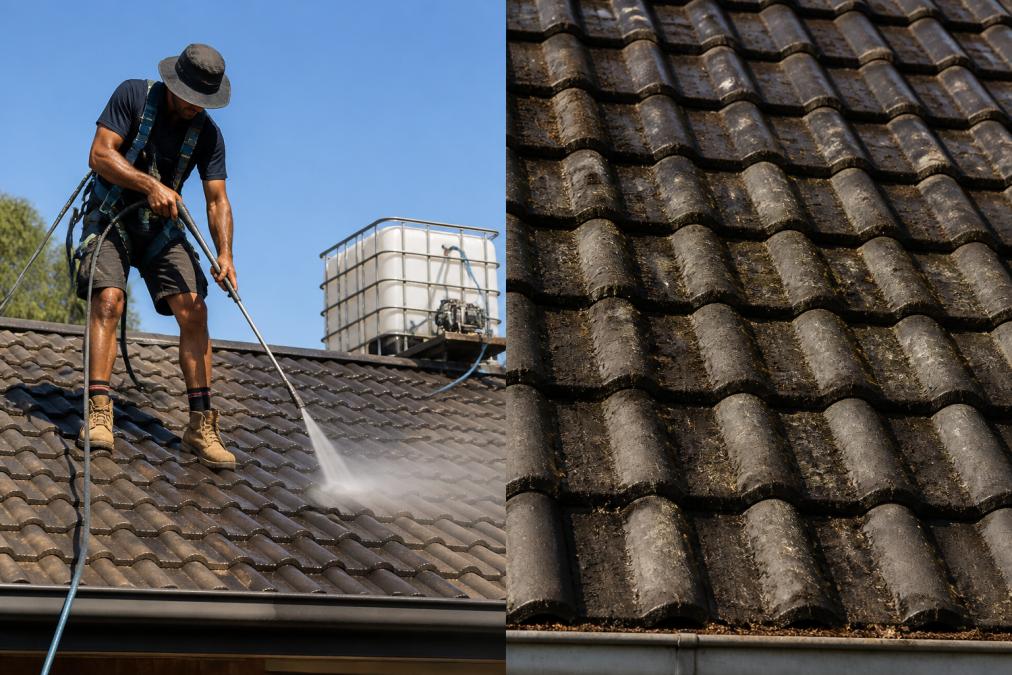
The wrong method causes damage that is not immediately visible. Pressure damage is often discovered months later when leaks appear or the roof begins to rust. A professional roof cleaning service will assess the material first and select the appropriate method. If a contractor arrives with only a high-pressure machine and no chemical treatment plan, that is a red flag.
Roof Cleaning Cost Estimate: What Determines the Price?
Roof cleaning is not a flat-rate service, and any provider quoting a single price without a site inspection is guessing.
Key cost drivers include the size of the roof, its pitch and accessibility, the type of material, and the severity of the moss or lichen infestation. A single-storey home with a simple Colorbond roof is quicker and safer to clean than a two-storey property with steep terracotta tiles. The condition of the roof also matters; if tiles are cracked or loose, the crew must work more carefully, which adds time.
Given these variables, the most reliable approach is to request a free quote based on an inspection. A reputable provider will assess the surface condition and explain the roof cleaning cost estimate clearly before any work begins.
Roof Material Matters: Tile, Terracotta, and Colorbond
A professional roof cleaning service must tailor its approach to the specific material, as each has unique chemical and pressure tolerances. A one-size-fits-all method is a red flag.
Terracotta and cement tile are porous and fragile. They absorb water and provide an ideal base for moss and lichen. Soft washing is essential here, but the chemistry matters as much as the pressure. A professional will use a sodium hypochlorite-based solution at a concentration of roughly 1-2% for terracotta, which is strong enough to kill organic growth at the root without bleaching the clay’s natural colour (peer-reviewed research). The solution must be applied and left to dwell for 10-15 minutes before a low-pressure rinse (under 500 PSI) to allow it to penetrate the root structure (the CDC). High pressure can blast away the protective glaze on terracotta, leaving the clay exposed to the elements and accelerating future growth. For cement tiles, which are more alkaline, a professional may adjust the pH of the cleaning solution to prevent efflorescence, the white, powdery salt deposits that appear after improper cleaning.
Colorbond steel is less porous but vulnerable to scratches and chemical damage. The protective paint layer is a baked-on finish that can be dulled by abrasive cleaning or high pressure. A gentle chemical wash is the standard, but the solution must be neutralised. A professional will use a low-foam, non-ionic surfactant mixed with a mild biocide, applied at low pressure and rinsed thoroughly (the EPA). The critical step is neutralisation: after rinsing, a citric acid-based neutraliser is applied to stop any residual alkaline cleaner from reacting with the paint. This prevents the dulling and micro-cracking that can lead to corrosion over time. On Colorbond roofs, excessive pressure can strip the paint finish, leading to rust, which is why a professional will never use a turbo nozzle or a surface cleaner on this material.
Concrete and slate tiles require careful inspection for cracks before cleaning. Concrete tiles are dense but can be brittle along the edges. A professional will identify damaged tiles during the job and flag them for replacement, which prevents leaks down the line. The cleaning method for concrete is similar to terracotta, but the dwell time for the chemical solution is often longer because concrete is more absorbent. Slate is a natural stone that is relatively non-porous but can be stained by iron-rich water runoff. A professional will use a specialised oxalic acid-based cleaner for slate to remove rust stains without etching the stone’s surface. This is where the expertise of a professional roof cleaning service becomes critical, as an untrained eye will miss hairline fractures that turn into significant repairs.
The unique angle most guides miss: The choice of cleaning agent is not just about effectiveness, it is about environmental impact. In Sydney, runoff from roof cleaning can enter the stormwater system, which flows directly into local waterways like the Parramatta River and Botany Bay. A responsible professional will use biodegradable surfactants and neutralise the cleaning solution on the roof before it reaches the gutters. This protects your garden, your neighbours’ properties, and the local ecosystem. When you request a quote, ask specifically what chemicals will be used and how the runoff will be managed. A company that cannot answer this question is not operating to the standard that Sydney’s environment requires.
DIY vs Hiring Professionals: A Realistic Risk Assessment
The DIY appeal is strong, particularly when you can rent a machine for a day. However, the risks associated with DIY roof cleaning are substantial and often underestimated. To make an informed decision, you need a realistic assessment of what is actually involved.
The safety reality. Roof work is one of the most dangerous tasks a homeowner can attempt. Wet tiles are extremely slippery, and working at height without proper harnesses and anchor points is a leading cause of serious injury. A professional contractor is trade licensed and carries insurance that covers both their team and your property. They have the correct fall-arrest equipment, including a full-body harness, lanyards, and anchor points rated to Australian standards, plus public liability insurance. A DIY attempt has none of these protections. If you fall, your personal health insurance may not cover the full cost of recovery, and if you damage your roof, your home insurance may not pay out because the damage was caused by your own unlicensed work.
A pre-work safety checklist for homeowners. If you are still considering DIY, here is a checklist that most professionals use before they step onto a roof. If you cannot satisfy every item, you should not proceed. First, check the weather forecast: do not work on a roof that is wet, windy, or likely to rain within 24 hours. Second, inspect the roof surface from the ground for obvious hazards, such as loose tiles, broken gutters, or power lines. Third, ensure you have a stable ladder that extends at least one metre above the roofline, and have someone on the ground to hold it. Fourth, wear rubber-soled shoes with a good tread, barefoot or in socks is not an option. Fifth, never work alone. If you fall, you need someone to call for help immediately.
The seasonal timing factor. Sydney’s climate dictates when roof cleaning is most effective. The best time to clean is in late autumn (April-May) or early spring (September-October), before the heavy rain seasons. Cleaning in late autumn removes the organic growth that has accumulated over the summer and prepares the roof for the winter wet season. Cleaning in early spring addresses any growth that survived the winter and prepares the roof for the summer storms. A professional will schedule your clean around these windows, and they will also advise on a maintenance schedule: for most Sydney roofs, an annual clean is sufficient, but if you have heavy tree cover or a south-facing roof that stays damp, a bi-annual clean may be necessary. DIY attempts often happen in the middle of summer, when the roof is dry but the moss is dormant and harder to remove effectively.
The property damage risk. Using high pressure on the wrong surface can crack tiles, strip paint, and force water into the home. A rented machine does not come with a technician who understands the nuances of different roofing materials. The third risk is ineffective results. If you simply blast the moss off without killing the roots, the black spots will return within months. A professional soft wash kills the root structure, which means the results last significantly longer.
A common DIY mistake is using a high-pressure nozzle to clean gutters from the roof edge. This frequently damages gutters and downpipes, leading to water overflow and foundation issues that cost more to repair than professional cleaning would have.
The cost comparison. The financial argument for DIY is often based on the daily rental cost of a pressure washer, which is around $80 to $150 per day. However, this does not include the cost of cleaning chemicals, safety equipment, or your own time. More importantly, it does not include the potential cost of a mistake. A single cracked tile can cost $50 to $150 to replace, and if you damage the roof membrane or flashing, the repair cost can easily exceed $1,000. A professional service provides a fixed quote, insurance coverage, and a warranty on the work.
What to Look For in a Roof Cleaning Company
Choosing the right contractor is the difference between a roof that lasts decades and one that fails prematurely. Start by confirming the company is trade licensed and insured. Ask about their chemical usage; a responsible company uses biodegradable solutions and neutralizers to protect your garden and local waterways.
Look for a provider that offers a clear process: inspection, method selection, cleaning, and a post-service report. Companies that specialise in both high-pressure and soft washing demonstrate a versatility that single-method operators lack.
Sydney Pressure Washing Service fits this profile, using biodegradable cleaning solutions and neutralizers across both high-pressure and soft washing techniques. We recommend asking for a detailed quote that outlines the method for your specific roof type. A professional will not hesitate to explain why soft washing is safer for your terracotta tiles than pressure cleaning.
Conclusion: Protect Your Roof and Your Investment
Your roof is your first line of defence against the elements, and it works hardest during Sydney’s storm season. Neglecting it leads to costly repairs and diminished property value. Regular professional roof cleaning services, performed with the right method for your material, are the most cost-effective way to extend its life.
Choosing a trade-licensed team that uses environmentally conscious methods protects both your home and your garden. At Sydney Pressure Washing Service, we combine high-pressure and soft washing techniques to restore your roof’s integrity and appearance safely. Get a free quote and see the difference a proper inspection and tailored cleaning plan makes.
=== FAQ ANSWERS (ARTICLE CONTENT, AUDIT EACH ONE SEPARATELY, SAME RULES) ===
Frequently Asked Questions
How often should you have your roof professionally cleaned?
Most Sydney homes benefit from a professional roof cleaning every 2 to 3 years. However, homes under heavy tree cover or in damp, shaded areas may need annual attention to prevent moss and lichen from establishing. Regular cleaning, paired with a preventative treatment, stops organic growth from taking hold and extends the period between full cleans. A quick inspection after major storms can also help you spot problem areas early, saving you from costlier restoration work later.
Is soft washing better than pressure washing for roof tiles?
Yes, for most roof tiles, soft washing is the safer and more effective choice. High-pressure water can blast away the protective glaze on terracotta and cement tiles, leaving them porous and prone to faster moss regrowth. Soft washing uses low pressure combined with biodegradable cleaning solutions to kill moss, lichen, and algae at the root. This method protects the integrity of your tiles and delivers longer-lasting results, which is why professional services prefer it for delicate roofing materials.
Does roof cleaning remove lichen and moss effectively?
Professional roof cleaning removes existing moss and lichen effectively, but the treatment is just as important as the wash. A thorough service includes applying a specialised chemical treatment after cleaning. This solution kills any remaining spores and creates a barrier that slows regrowth. Without this step, black spots and moss can return within months. A quality service will include a preventative treatment in the quote, ensuring your roof stays clean for years, not just weeks.
What is the difference between roof restoration and roof cleaning?
Roof cleaning focuses on removing organic growth, dirt, and grime to restore the surface’s appearance and function. Roof restoration is a more extensive process that involves repairing broken tiles, resealing ridges, and applying a new protective coating or paint. Think of cleaning as essential maintenance and restoration as a full makeover. Many homeowners use professional cleaning as a preventative measure to delay the need for a full restoration, which is a significantly larger investment.
