
Table of Contents
- How High-Pressure Cleaning Damages Roof Surfaces
- Water Intrusion, Leaks and Attic Damage
- Soft Washing vs Pressure Washing Roof: What Changes
- How to Clean Mould Off Roof Without Causing Damage
- How to Remove Moss From Roof Without a Pressure Washer
- Warranties, Service Life and Long-Term Structural Costs
- Frequently Asked Questions
Last Updated: September 24, 2026
How High-Pressure Cleaning Damages Roof Surfaces
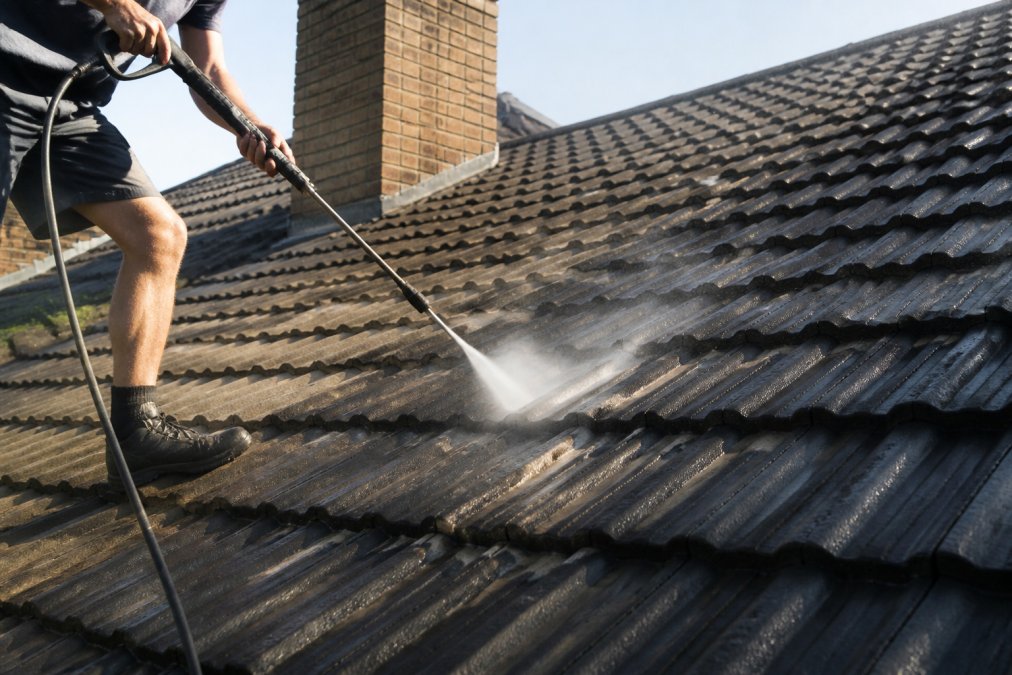
Is pressure washing bad for roof surfaces? Yes, in most cases. High-pressure cleaning forces water at 2,000 to 4,000 PSI against materials never built to take that force, and the damage often shows up weeks later. This guide from Sydney Pressure Washing Service explains what goes wrong, and what to do instead.
Three things drive the damage: pressure, heat, and volume. Roofing material is designed to shed rain, not resist a jet. Water flow finds every weak point and makes it worse.
Standards Australia building and plumbing codes
Granule Loss on Asphalt Shingles
Asphalt shingles rely on a layer of mineral granules to block UV light and water. A pressure washer strips those granules away in seconds. Once they’re gone, the asphalt underneath dries out, cracks, and fails early. You can often see the loose grit washing into gutters right after a clean.
Cracked Tiles, Displaced Ridge Tiles and Exposed Underlayment
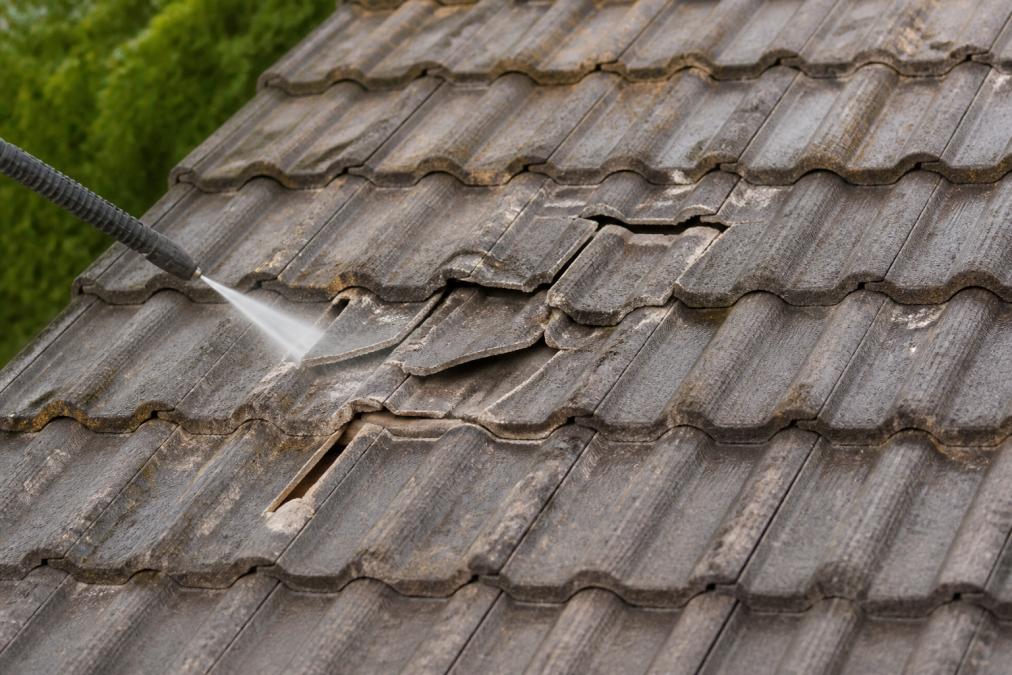
Clay and concrete tiles look tough. They are brittle. A jet at close range chips the surface finish, cracks tile edges, and knocks ridge tiles out of place. When tiles shift, the underlayment underneath is exposed to sun and rain. That is where leaks start.
Water Intrusion, Leaks and Attic Damage
Water intrusion is the hidden cost of pressure washing a roof. The jet drives water sideways and upward, under tiles and through small gaps. It doesn’t need a big opening. A hairline crack in a tile or a worn flashing is enough.
Once water gets in, it soaks insulation and timber battens. Damp roof spaces grow mould, and mould spreads through the attic and into ceilings. You may not notice for weeks. By then, the leak has caused rot in framing and stained plasterboard inside.
Signs to watch for after any roof clean:
- Brown water stains on ceilings or cornices
- A musty smell in the roof space
- Sagging insulation batts
- Damp patches around light fittings
If you see any of these, get a roof plumber out fast. Small leaks get expensive quickly.
Safe Work Australia guidance on working at heights
Soft Washing vs Pressure Washing Roof: What Changes
Soft washing vs pressure washing roof comes down to one thing: force. Soft washing uses low pressure, under 500 PSI, plus a biodegradable cleaning solution. The chemical does the work. The water just rinses.
Pressure washing relies on force alone. That is why it damages roof tiles and shingles.
| Method | Pressure | How It Works | Best For | Risk to Roof |
|---|---|---|---|---|
| Pressure washing | 2,000-4,000 PSI | Blasts grime off | Concrete, pavers | High |
| Soft washing | Under 500 PSI | Chemical clean, gentle rinse | Tiles, shingles, timber | Low |
| DIY garden hose | Low flow | Manual scrub | Light dust only | Very low |
Soft washing kills moss, algae, and mould at the root. Pressure washing only removes what it hits. That is why growth often returns within months after a pressure clean.
The chemical mix matters more than the machine. A soft wash with the right biocide keeps working for weeks after the job, killing spores the eye can’t see.
How to Clean Mould Off Roof Without Causing Damage
To clean mould off a roof safely, treat it with a low-pressure chemical wash rather than a jet. Mould is a living growth. Killing it works better than blasting it off.
Steps for a safe clean:
- Check the forecast and pick a dry, still day
- Cover plants and gutters below the work area
- Apply a biocide or oxygen-based cleaner at low pressure
- Let it dwell so it kills spores at the root
- Rinse gently with a garden hose or low-pressure unit
- Repeat in 6-12 months as part of a maintenance schedule
The black streaks you see are usually algae, not dirt. It feeds on moisture and spreads across tiles. A chemical clean stops it spreading. A pressure clean just spreads spores further.
How to Remove Moss From Roof Without a Pressure Washer
To remove moss from a roof without a pressure washer, scrape it off by hand and treat the area with a moss killer. Moss holds water against the roof surface, which speeds up weathering and shortens service life. But the bigger opportunity is preventing moss from taking hold in the first place, a maintenance calendar that keeps you off the roof with aggressive equipment entirely.
A simple removal method:
- Use a soft-bristle brush or plastic scraper
- Work from the ridge down, never upward
- Bag the moss, don’t wash it into gutters
- Apply a moss treatment to the cleared area
- Check ridge tiles and flashings for damage while you’re up there
Never walk on a wet or fragile roof. Tiles crack underfoot, and falls are the real danger. If the roof is steep, high, or fragile, call a professional.
A Proactive Maintenance Calendar That Prevents Moss
Most moss problems start with shade, moisture, and organic debris. If you remove those conditions, you rarely need to clean aggressively. Here is a seasonal schedule that works for most Australian climates:
- Autumn (March-May): Clear gutters and remove leaf litter from valleys and ridges. Debris traps moisture against tiles and feeds moss spores.
- Winter (June-August): After heavy rain, check for dark patches or green film on south-facing slopes. Treat early with a low-pressure biocide before moss establishes roots.
- Spring (September-November): Inspect ridge tiles and flashings for movement. Trim overhanging branches that shade the roof and drop debris.
- Summer (December-February): Wash down with a garden hose on a cool morning. Avoid midday heat, which can shock tiles and evaporate cleaning solution before it works.
This calendar prevents the need for pressure washing because it stops moss before it binds to the surface.
DIY Safe Cleaning Methods That Don’t Require Professional Equipment
- Garden hose and soft brush: For light dust and early moss, a standard hose with a soft-bristle brush is enough. Work top-down and rinse gently.
- Oxygen-based cleaner: Mix according to the label, apply with a garden sprayer, let it dwell for 15-20 minutes, then rinse. This kills spores without harsh bleach.
- Biocide treatment: For recurring moss, apply a biocide rated for roofing surfaces. It keeps working for weeks after application, killing spores the eye can’t see.
- Manual scraping: For thick moss, scrape with a plastic tool, bag the debris, and treat the area. Never use a metal scraper, which scratches tiles and creates places for water to pool.
Mixing bleach with other cleaners can release toxic gas. Use one product at a time, follow the label, and wear eye and skin protection. Never mix ammonia-based cleaners with bleach.
If you follow this calendar and use these DIY methods, you may never need a pressure washer on your roof. That is the point: the best roof cleaning is the one you don’t have to do because you prevented the problem.
Warranties, Service Life and Long-Term Structural Costs
- Find the manufacturer’s maintenance guide (usually a PDF on their website) and search for “cleaning,” “pressure,” and “approved methods.”
- Check whether the warranty requires professional cleaning or specific low-pressure equipment.
- Photograph the roof before cleaning, including any pre-existing cracks or lifted tiles.
- Keep the receipt and method statement from the cleaner, some warranties require proof of method if a claim is made.
- If you DIY, use a garden hose and soft brush only, and document that you did.
ACCC guidance on consumer guarantees and warranties
The long-term costs of ignoring this add up fast:
- Premature granule loss can shorten shingle life by years, turning a 20-year roof into a 12-year roof.
- Cracked tiles lead to water intrusion, attic damage, and mould that spreads into framing and insulation.
- Repair bills for a single leak often exceed the cost of a proper soft wash by several times.
- If the warranty is void, you pay for the full replacement, not a pro-rated share.
Before booking any roof clean, ask the contractor for a written method statement. If they can’t provide one, or if they plan to use a pressure washer above 500 PSI, you risk voiding your warranty and paying for the consequences yourself.
At Sydney Pressure Washing Service, our trade-licensed team uses soft washing with biodegradable solutions and neutralisers. We clean roofs, timber, and cladding without the damage a pressure washer causes.
Your Home guide to roof maintenance
Frequently Asked Questions
Is pressure washing your roof a bad idea?
For most roof types, yes. High-pressure water strips protective coatings, dislodges granules on asphalt shingles and cracks or displaces tiles, which lets water into the roof space. It also pushes water under flashings and into the roof cavity, where it can cause leaks and mould growth. Soft washing with low pressure and a biodegradable biocide cleans the same surfaces without that damage, so it is the safer option for tile, shingle and metal roofs.
What damages a roof the most during cleaning?
Excessive pressure and the wrong nozzle angle cause the worst damage. A narrow jet at close range can gouge tile surfaces, blast granules off shingles and force water past ridge tiles and underlayment. Walking on the roof adds mechanical stress, and harsh chemicals can kill plants and corrode metal flashings. Using low pressure, a wide fan nozzle and a suitable biocide avoids all four problems while still removing moss growth, algae and grime.
Can I clean my roof with a pressure washer myself?
You can, but the risk of damage is high. Rental machines often run at pressures well above what a roof can handle, and without training it is easy to strip coatings or force water into the roof space. For DIY work, use a garden sprayer with a diluted biocide, a soft brush and low-pressure rinsing instead. If you want the speed and finish of a pressure washer, book a soft washing service that uses controlled low pressure.
What is the difference between pressure washing and soft washing?
Pressure washing uses high-pressure water, typically measured in PSI, to blast dirt off hard surfaces like concrete driveways. Soft washing uses low pressure combined with a biodegradable cleaning solution that kills mould, algae and moss at the root. For roofs, soft washing is the safer method because it cleans without stripping protective coatings or forcing water under tiles. It also keeps surfaces clean for longer, since the biocide treatment continues working after the job is done.
