
Table of Contents
- Why Safe Chemical Cleaning for Gardens Matters
- Protecting Plants During Pressure Washing
- How to Neutralise Chemical Runoff
- Biodegradable Soft Washing Solutions Explained
- Reading Hazardous Chemical Symbols and Dilution Ratios
- Managing Chemical Spills and Soil Contamination
- Pet and Pollinator Safety Protocols
- Conclusion
- Frequently Asked Questions
Last Updated: September 22, 2026
Why Safe Chemical Cleaning for Gardens Matters
Safe chemical cleaning for gardens is the practice of using detergents and treatments that remove grime without harming plants, pets, or soil. It matters because a single careless wash can strip a garden bed for months.
The problem is rarely the cleaning itself, it is the runoff.
Water carries detergent, bleach, mould spores, and dirt downhill into the soil where your plants grow. Garden beds sit lower than paths and driveways, so they catch all of it.
Safe chemical cleaning for gardens comes down to four habits:
- Choosing biodegradable products over harsh ones
- Protecting plants before water touches the surface
- Managing where runoff goes
- Cleaning up spills fast
Get those four right and you can clean almost any exterior surface without losing a shrub.
Below, we break down each step, plus the safety symbols and dilution ratios that most guides skip.
Protecting Plants During Pressure Washing
Plants suffer most from two things during pressure washing: blast damage and chemical burn. Both are avoidable with ten minutes of prep.
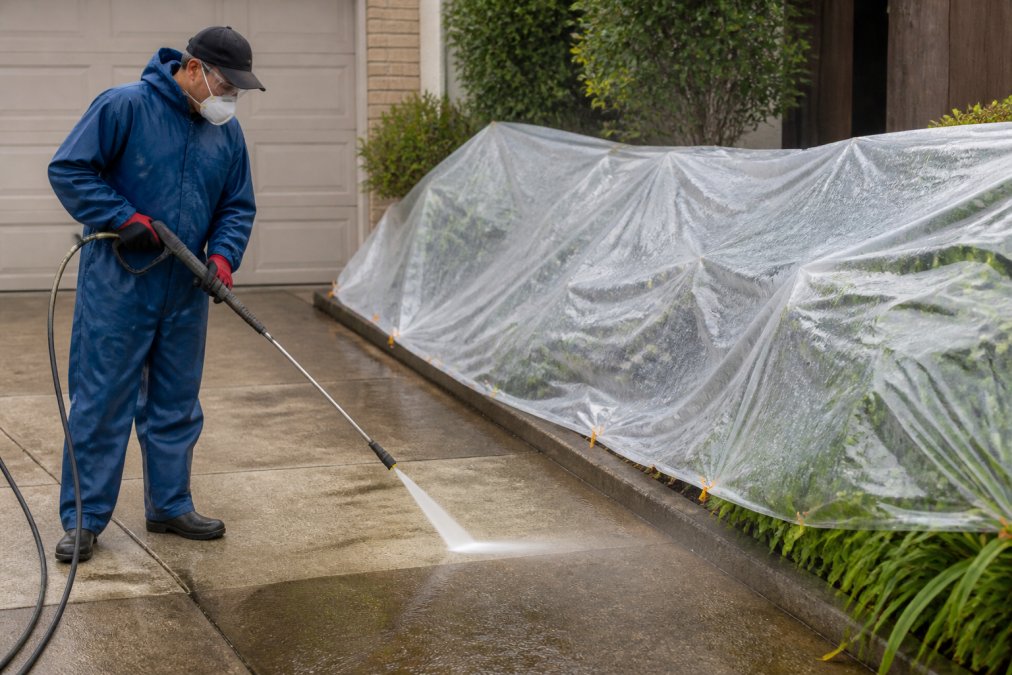
Cover garden beds with plastic sheeting or a tarp, weighted at the edges with bricks or timber. Move potted plants well clear of the work area.
For in-ground plants you cannot move, wrap them loosely with breathable fabric such as old bedsheets. Plastic traps heat and can cook foliage, so use it only for short jobs.
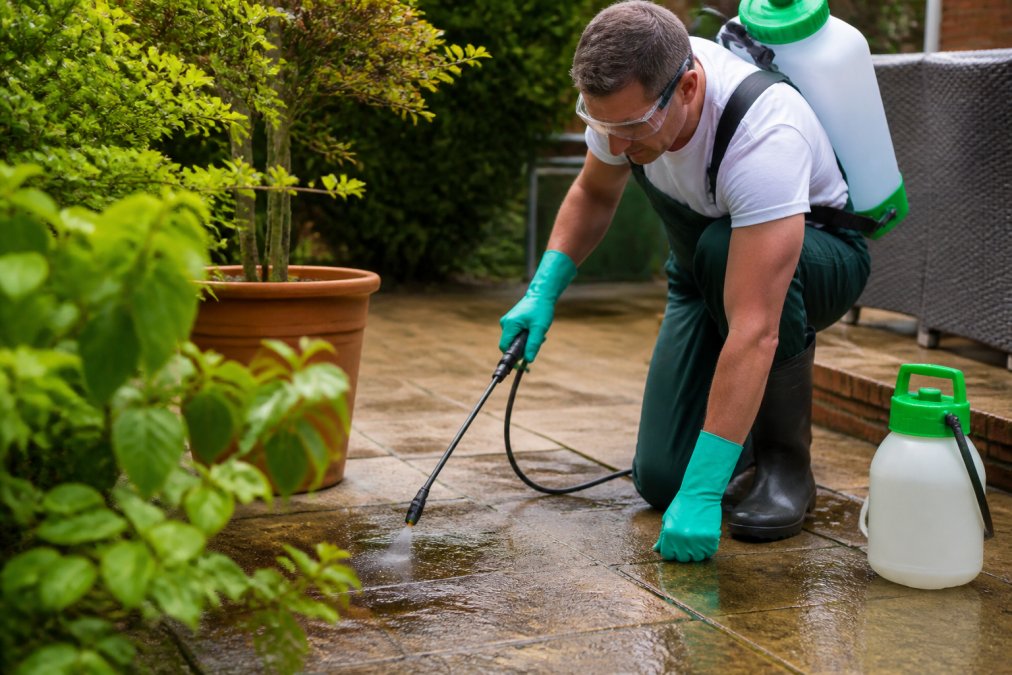
Pre-Wetting and Rinsing Techniques
Pre-wetting is the single most effective trick for protecting plants during pressure washing. Soak the soil and foliage around the work area before you start.
Wet soil dilutes any chemical that reaches it, and wet leaves absorb less. A five-minute soak can be the difference between a healthy garden and a dead one.
Then rinse again when you finish. Flush the area with clean water for several minutes to push residue away from roots.
Using Breathable Barriers and Overspray Control
Overspray, the fine mist drifting beyond where you are aiming, is the main cause of accidental plant damage.
How to Neutralise Chemical Runoff
Neutralising runoff means bringing the pH of your wastewater back toward neutral before it reaches soil or stormwater. Most cleaning products are acidic or alkaline, and both can harm plants, this is the step most guides skip.
The chemistry in plain terms
Acids release hydrogen ions (H⁺); alkalis release hydroxide ions (OH⁻). When the two meet, they form water and a salt. You are not destroying the cleaning agent, you are shifting its pH so it stops burning foliage and locking up soil nutrients.
- Alkaline cleaners, bleach-based mixes, sodium hypochlorite, most degreasers, and many soft-wash solutions. Typically pH 10-13.
- Acidic cleaners, descalers, rust removers, some mould treatments, and vinegar-based mixes. Typically pH 2-5.
Matching the neutraliser to the product
| Product type | Neutraliser | How to apply |
|---|---|---|
| Alkaline (bleach, degreaser) | White vinegar or citric acid solution | Add slowly to the runoff, stir, retest |
| Acidic (descaler, rust remover) | Baking soda or garden lime slurry | Sprinkle in, allow to fizz, retest |
| Surfactant-heavy (soaps, detergents) | Dilution, not pH correction | Flush with 3-5 parts clean water |
Add neutraliser in small increments, overshooting turns a mild alkaline spill into an acidic one, which is just as damaging. Test with pH strips as you go; a pack costs a few dollars at any hardware store.
Never mix a neutraliser directly into a concentrated cleaner still in its container. The reaction can generate heat, splatter, or gas. Always dilute the spill first, then neutralise the diluted runoff.
Equipment-specific neutralisation
The neutralisation step differs between cleaning a tool and cleaning a structure.
What to do with neutralised water
Neutralised runoff still contains dirt, surfactants, and dissolved salts. The safe pattern is:
- Capture where practical.
- Neutralise and retest.
- Release onto hard surfaces (driveway, gutter) rather than soil.
- Never release into a stormwater drain, in most council areas that is a reportable pollution event.
A quick field test
Before a full wash, test a small patch: mix your solution at the intended ratio, apply it to a spare tile or paver, let it sit for the dwell time, then test the runoff with a pH strip. If it reads below 6 or above 8.5, adjust your neutraliser dose before scaling up.
Biodegradable Soft Washing Solutions Explained
Biodegradable soft washing solutions are low-pressure cleaning mixes that break down naturally after use, relying on surfactants and gentle detergents rather than harsh solvents.
This approach suits surfaces that high pressure would damage:
- Timber decking and cladding
- Roof tiles and shingles
- Painted render and weatherboard
- Delicate garden edging and pavers
Reading Hazardous Chemical Symbols and Dilution Ratios
Every cleaning product sold in Australia carries hazard symbols and a safety data sheet. Learning to read them takes five minutes and prevents most accidents.
The most common symbols you will see:
- Corrosive: burns skin and eyes on contact
- Toxic: harmful if swallowed or inhaled
- Irritant: causes redness or itching
- Environmental hazard: toxic to fish and waterways
- Oxidising: can react violently with other chemicals
| Dilution Ratio | Use Case | Notes |
|---|---|---|
| 1:10 | Heavy mould on concrete | Strongest safe mix |
| 1:20 | General driveway cleaning | Most common ratio |
| 1:50 | Light maintenance wash | Safe near plants |
| 1:100 | Rinsing and pre-wet | No chemical action |
Managing Chemical Spills and Soil Contamination
A chemical spill becomes a soil contamination problem within minutes, and the response depends on what spilled, where it landed, and what is growing nearby.
First response: contain, don’t dilute
The instinct to hose a spill away is wrong, water spreads the problem across a wider area and pushes it toward garden beds and drains.
- Stop the source. Right the container, close the lid, move it clear.
- Bund the spill. Build a small dam with sand, soil, or a rolled towel to stop liquid running downhill.
- Absorb. Cover with kitty litter, sand, or commercial spill pads. Leave for several minutes.
- Bag and dispose. Seal the saturated material in a heavy-duty bag. Most councils accept household chemical waste at designated drop-off days, check your local council’s schedule rather than putting it in the general bin.
How cleaning agents actually damage soil
Soil damage is rarely instant. It shows up over weeks as yellowing leaves, stalled growth, and nutrients that seem unavailable despite fertilising.
Reading the signs of contamination
| Symptom | Likely cause | Action |
|---|---|---|
| Yellowing between leaf veins | pH shift locking iron | Test pH, adjust with lime or sulphur |
| Leaf edge burn | Salt accumulation | Flush with clean water over several days |
| Stalled growth, no response to fertiliser | Nutrient lockout | Soil test, then amend |
| Wilting despite wet soil | Root membrane damage | Reduce watering, allow recovery |
A basic pH test kit gives a reading in minutes. Below 6.0, garden lime raises it; above 7.5, elemental sulphur or compost lowers it. Retest after three to four weeks, soil chemistry moves slowly.
Pet and pollinator exposure after a spill
Pets and pollinators are the two groups most often forgotten, and both are highly sensitive to residue.
- Never spray or spill near flowering plants during bloom.
- Work early morning or late evening when bee activity is lowest.
- Rinse flowering borders with clean water after any nearby work.
- If a spill reaches a flowering bed, cut and remove affected blooms rather than rinsing them in place.
A spill kit stored before you start is worth more than any cleanup technique. Absorbent material, pH strips, gloves, a sealable bucket, and a hose cover 90% of household garden chemical incidents.
Preventing the next spill
The most effective contamination control is spilling less. Decant only what you need, keep the original sealed, never leave open containers on uneven ground, mix solutions on a hard surface with a bund rather than on soil, and read the safety data sheet before the job.
Pet and Pollinator Safety Protocols
Keep pets indoors for the full job and at least two hours after. If a pet walks on a treated surface, wash its paws with plain water.
Simple rules that protect both:
- Never spray flowering plants, even with a mild mix
- Work early morning or late evening when bees are less active
- Rinse flowering borders with clean water after the job
- Skip chemical cleaning entirely during peak flowering
Conclusion
The hardest part of safe chemical cleaning for gardens is knowing which products, ratios, and protections to use before you start.
Frequently Asked Questions
What is the best outdoor cleaner that is safe for plants?
Biodegradable soft washing solutions with a neutral pH are safest for garden plants. Look for products labelled non-toxic and free from bleach or harsh surfactants. Pre-wet surrounding plants before cleaning and rinse them thoroughly afterwards to dilute any overspray. Always check the dilution ratio on the label and avoid applying near edible crops or pollinator-friendly plants.
How do I protect my garden from cleaning chemicals?
Cover garden beds with breathable barriers or plastic sheeting before you start. Pre-wet plants and soil so they absorb less chemical, then rinse everything within 30 minutes of finishing. Direct runoff away from garden beds using sandbags or absorbent materials. Choose biodegradable soft washing solutions and avoid cleaning on windy days when overspray travels further.
How can I neutralise cleaning runoff in my garden?
Use neutralizers designed for cleaning chemicals, or apply diluted vinegar to acid-based runoff and baking soda for alkaline products. Absorbent materials like sand or kitty litter can contain small spills before they reach soil. For larger runoff, create a temporary barrier with sandbags to redirect liquid away from garden beds. Always check the product’s safety data sheet for specific neutralisation guidance.
Are biodegradable detergents safe for garden soil?
Biodegradable detergents break down faster than conventional products, but they can still affect soil pH balance if used in large quantities. Choose products with a neutral pH and avoid over-application. Rinse treated areas thoroughly and monitor plant health for a few days after cleaning. If you have organic gardening beds, use plain water or a dedicated garden-safe cleaner instead.
